Showing posts with label Small mercies. Show all posts

Friday, 24 March 2017

Jesus, did he exist? - thirty-three teachings that have stood the test of time

Here are some of the teachings of a 1st century man, described in literature, but claimed, by some, never to have existed. The teachings seem very humane and sensible, and apart from the mentions of "God", quite devoid of superstition. Taken on merit, these teaching are evidence of a highly enlightened mind.

1. That God is a loving Father.
2. That like any loving father, God has expectations of his children.
3. That every person who walks this earth is your neighbour, and worthy of your kindness in times of trouble.
4. That you should treat others as you would like to be treated.
5. That showing loving kindness means responding to the needs of those around you- the lonely, the poor, the disadvantaged, the incapacitated and those who may be suffering as a result of their own doing.
6. That women should be educated, along with men, and have their voices heard, along with men
7.That the poor, the sick, the disabled, the mentally ill, the foreigner and the person who holds to a different faith have the same human rights as the majority.
8. That rape is totally abhorrent.
9. That ritual cleanliness/uncleanliness is a load of nonsense.
10. That the words that come out of a person's mouth are more important than whether the food that goes into it is kosher, halal or even tasty.
11. That everyone ought to have enough to live on, even if they cannot do a full days work.
12. That having a day off every week is good for people.
13. That you shouldn't fuss about your appearance.
14. That when someone does you an honour, you should respond appropriately.
15. That if someone is determined to act like an absolute dickhead, you should turn your back and walk away.
16. That being preoccupied with money can seriously get in the way of living a good life.
17. That before we criticise others, we ought to take a long look at ourselves.
18. That sometimes we have to use a good deal of courage to break from patterns of behaviour that are wrecking our lives.
19. That a sincere apology can turn around a situation.
20. That forgiveness is healing.
21. That greedy, disrespectful people need their butts kicked.
22. That bigots who think they are better than those around them have seriously missed the point.
23. That you can help a person who knows they need your help, so it is worth putting in the time with them.
24. That we are individuals, and what is good for one person might not be appropriate for another.
25. That there is no ordinary task that is beneath our dignity so if something needs cleaning up, then just do it.
26. That sharing a meal together, whether it is a formal dinner or a barbecue on the beach, is important for relationships.
27. That truly dangerous people can often be hard to recognise.
28. That a great leader is one who serves the people that he is leading.
29. That if what you have to say really matters, say it, even if you are despised for doing so.
30. That sometimes it is best to be silent.
31. That we may be called upon to make major sacrifices, for the good of others.
32. That death is not the end
33. That one good person really can make a very big difference.
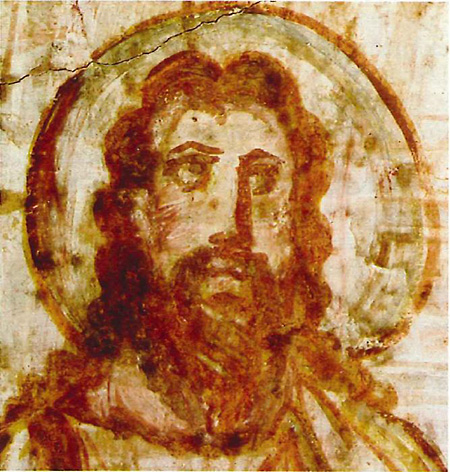


Image of Jesus from a catacomb in Rome, 3rd century AD.
Previous images had not attempted to depict him as a
Jewish Rabbi but had used a symbolical figure of a
shepherd with a sheep on his shoulders


Sunday, 15 June 2014

Another poem


This is a young Clydesdale, not the Norman of the poem who was a mature horse.
He was photographed at Mount Kembla, NSW,  in 2006


Reprieve


“I reckon he’s a real nice horse!”
says Peter Fuller, leaning on the paddock fence.
“I got him from the knackers
and I don’t know where he came from.
He’s got lovely conformation,
noble head
and good strong legs!”
Norman stood on four great tree-trunks
feathered white around each base,
with a coat of old red cedar
and a white blaze down his face.
“But I don’t know if he’s ever worked before,”
says Peter Fuller,
“So I’ll harness up
and try him out today.
We’re doing a promotion for the discount store,”
says Peter Fuller.
“I just hope that he’s OK!”

Peter burnished Norman’s hide,
polished up the stripy hooves
and decked his tail with flowers and ribbon.
Norman lowered down his head
while in his mane rosettes were made.
Out came the Scottish harness,
all its leather oiled with Dubbin,
the heavy collar, the shining chains,
the silver breastplate, the gleaming brasses.
 Norman took the bit and backed up to the waggon.
Peter fixed the traces and gathered up the reins.

All day long
the country town of Orange
rang with the echoes of its
not-so-distant past-
staccato clopping of the hooves,
the jingling chains, the clink of brass,
the heavy rumbling of the wheels,
the old familiar cries
of “Gee!” and “Whoa!”
And all day Norman worked
and all day Peter sat aloft
and only cracked the whip
to make a show.


At six o’clock,
the last delivery done,
they turned the waggon round
to head for home.
“A mighty chunk of horse-meat you got there!”
remarked the butcher,
pausing in his door
to lean upon his broom.
Peter climbed down off the seat
and stroked the horse’s sweating side.
“I got him from the Blayney Abattoir
for thirty quid!
We’re going in the Lithgow Show-
and after that, the Royal!
I want to buy that fancy cart
that’s sitting in your shed.
I reckon we’re a real good team!”
Peter Fuller said.


© Tamsyn Taylor,     February 18, 2002


Sunday, 16 March 2014

The Lord's Prayer

Mike Taylor
My brother Michael Taylor died last year, a few days before his 73rd birthday.  He had lived in a nursing home for six years, keeping the staff entertained and on the run, with his loud, cheerful and demanding voice, and his infectious laugh.  In the last months his health deteriorated rapidly. Always a gourmand, when he was no longer able to go to Gilmore's Hotel for grilled barramundi or steak dianne, the last real pleasure went out of his life.  As the end drew near, he rallied just long enough to send messages of love to people and say that he wanted us to sing "The Lord's My Shepherd" and play music of The Beatles at his funeral.  We stood around his bedside and prayed, led by our sister, the Revd Roberta Hamilton. The last word that our brother said was "Amen".  It was in response to the Lord's Prayer.

I have been reliably informed by young Evangelical Christians that we don't really need to learn the Lord's Prayer by heart.  One young man informed me confidently that in the future it will hardly be used any more. ..... and, although this might come as a surprise to some, in the Anglican Diocese of Sydney, this seems to be quite right.

The Sydney Diocese (for those who don't know) has a Bible College which sets the benchmark for how 21st Century Evangelical Ministry ought to operate.  A recent graduate of Moore College argued the point that the Lord's Prayer was given to us as an example of how to pray.  It didn't come with any obligation that it should be learnt by heart and repeated daily, or even repeated once every Sunday.  If we read the Lord's Prayer, and comprehend from reading it, how praying ought to be done, then we are free to pray our own prayers.  We can pray, safe in the knowledge that we know how to do it.  And, by this reasoning, a leader, in a church or community situation, knowing how to pray, can pray effectively for the congregation or group, and say what needs saying......... or can they?

Is there any reason for bothering to memorise the Lord's Prayer?  Is there any reason for using it, on occasions when Christians gather together, given that Jesus didn't actually command us to use it?


My son, who is now a Christian youth leader, went to a Christian school.  And for the six years that he was there, I went to services and functions. I don't recall ever praying the Lord's Prayer on any school occasion..... not once, even once, in those six years.  When parents were asked to comment on school matters, it was one of the things on which I wrote at length. To no avail.

My son goes to a large lively youth service at the local Christian auditorium, on Sunday evenings.  I do recall the Lord's Prayer being used once. It was on the occasion of Archbishop Peter Jensen's visit, and was the same day that the rector included the Apostle's Creed, and explained to the young people present that these two elements were traditional to Anglican Church worship, so we were going to repeat them, with the aid of the overhead screens, because, of course, none of the young people could be expected to know these things by heart.  In retrospect, Archbishop Peter may not have even noticed if they were omitted, since  he was previously the principal of Moore College, and may have had a part in encouraging his clergy in the understanding that they should make up their own prayers, rather than simply reciting what they have learnt.

I have already asked the question, is there a point in learning the Lord's Prayer (by heart, as they say), and continuing to use it?

My dying brother would encourage me to say, yes, there is!

It seems to me that there is an extraordinary degree of arrogance in the notion that we can dispense with  that which Christ himself gave us. This is the prayer of the person who, confronted with fear, agony or grief, can think of no other words.  This is the prayer of the aged and dying.   This is the prayer that remains when mind and memory fail.  This is the prayer that unites us as Christians across the world.

"No it's not," says my young Moore College graduate. "In point of fact, we are united by the Statement of Faith." (a.k.a. The Creed)
Well yes, that too!  But Jesus didn't give us the creed.  The creed is mankind's invention.  It's about Church. It isn't about God.  We don't "draw near to God" in the words of the Creed.  We draw near to God in prayer.

There has always been a place in both public and private worship for the custom-made prayer of the prayer leader or praying individual. We are encouraged to bring the "desires of our hearts" before God, in praise, thanks and petition. But does the priest or prayer leader know what the other praying individuals have in their hearts?

The arrogance of modern Evangelical leaders is that they think they have all the answers, all the time.  They obviously believe that the prayers that they utter, in front of, and on behalf of congregations, youth groups, school assemblies and so on, are able to fill all the needs every time; that after they have prayed, nothing is left undone, and no words remain to be said, on behalf of the group, to God.   The group listens and says "Amen". They say it, politely, whether everything has been covered, or not.  The group doesn't usually pray out loud, together, as a group, unless there is a prayer projected onto a screen that they can follow.  Nobody says, anymore, "As our Saviour Christ has taught us, we are confident to pray.....".  Young people are not taught, any more, so they are no longer "confident" to pray it.

The beauty of the prayer that Our Saviour taught us is that it covers all sorts of possibilities.  It states who it is to whom we pray: Our Father in Heaven.  It expresses his greatness and our trust in his wisdom and might. It sources our needs and petitions our forgiveness.  It acknowledges our weakness and seeks relief from our greatest fears.  Basically, it is the prayer that has everything covered.


Saturday, 26 November 2011

Love: 1 Corinthians 13


    As verger of St Stephen's Anglican Church, Newtown, I attended innumerable weddings. The Reverend Don Meadows and I made a good team.  While he welcomed, reassured, celebrated and preached, I parked cars, secured slipping veils, took flower-girls to the toilet, retied sashes, sorted out spats between mothers-in-law, distracted the odd drunk from disrupting the service, kept the neighbourhood kids quiet and played the carillon.

    Don had just one marriage sermon. He had refined it over the years and used it on every occasion, except when a member of his own congregation was getting married.  He preached it, at different degrees of complexity and with different inserted references to couples ranging from members of the law fraternity to a couple who met at a workshop for the intellectually disabled.  The sermon sought to encapsulate the Love of God in one easy and memorable lesson.

The personification of Charity and other Virtues
drew on the Classical tradition of the Muses.
    Of all the various wedding experiences that I had over the years, I most treasure an occasion when I heard the passage on Faith, Hope and Love from Paul's First Letter to the Corinthians, chapter 13, read superbly.  I was asked, before the service, to look out for the woman who was reading, because she was running rather late.  She was an actress, and they had asked her specially, because they were sure she would do it well. The Rector, I believe, had advised on a suitable passage of scripture.  

    The actress arrived in time, and when she stepped up to the lectern and smiled graciously, it was clear that something special was about to happen, but the impact of it upon the verger was unprecedented. This woman read St Paul's letter as if it was addressed to her personally, as if she had just received it from far away, opened it and was devouring it eagerly.  She read with growing excitement, with discernible joy, savouring each precious phrase of this, one of the best-known passages of the Bible, as if she was discovering it for the first time.    I was simply thrilled by the power of this actress, to convey all that, within the context of reading an epistle in church.  I told her so, after the service.
    The actress looked at me with a mixture of astonishment and delight. 
    "But, Dahling," she said "I was reading it for the first time! They left it till the last minute to ask me, and, as I don't own such a thing as a Bible, I had never read it before in my life!" 


Khalil Gibran and his spiritual poetry

   
    A later priest, under whom I served as verger, used often to include within the service a poetic reading by Khalil Gibran. I supposed I heard it almost as many times as I heard Don Meadow's sermon. But the sentiments, urging the married couple to stand apart like trees and let the wind blow through their love, never spoke to me of what I considered married love ought to be. I became convinced that, despite all the writing that he did on the subject, perhaps Khalil Gibran didn't understand love at all, and that some of his advice, taken in the context of marriage, may very well be seriously misconstrued.

    Gibran was born in the 19th century to a Maronite Christian family and migrated from Lebanon to the US. Much of Gibran's writings deal with Christianity, especially on the topic of spiritual love. But his mysticism is a convergence of several different influences : Christianity, Islam, Sufism, Hinduism and theosophy. His best known work is "The Prophet", 1923, and he is said to be the third most widely read poet in the world.

   Today I found a lengthy poem posted on another blog page.  Here is an excerpt:

When love beckons to you,  follow him,
Though his ways are hard and steep.
And when his wings enfold you yield to him,
Though the sword hidden among his pinions may wound you.
And when he speaks to you believe in him,
Though his voice may shatter your dreams
as the north wind lays waste the garden.


    The poem rolls on, piling image upon image, sometimes mentioning God, sometimes appearing without explanation, to have jumped from spiritual love to carnal desire and back again.

    Various comments have been made in praise of the beauty and spirituality of this poem.  However, I have quite a few problems with it. While the language uses appealing and seemingly deeply meaningful images, taken as a whole, it means nothing whatsoever. It is as intellectually satisfying as a mouthful of fairy floss.

    The poem obviously draws in part upon 1 Corinthians 13, and like much of Kahlil Gibran's writing, assumes pseudo-Biblical language and phrasing (in much the same way as 19th century translators of the Quran worded it in antiquated King James Version English to give it a "scriptural" feeling.) The words and imagery roll on in a most enticing manner. The content, however, is as hollow as the proverbial sounding brass and as shallow as the clashing cymbal.

    What is actually being said? What sort of love is being referred to?  Is this the profound love of God?   Is it the love that Christians are encouraged to have for one another?  Is it an all encompassing love for humanity?   Is it romantic love?  All these aspects of love are hinted at in passing.
If this poem is about spiritual love, then it fails to inform, to encourage or to sustain. It doesn't tell us that we are loved. It doesn't tell us how we should love. 

God as Love 

      In Christianity "God is Love".  Love is a primary attribute of God.   God is love just as God is truth and God is life.  Moreover, the love of God is distinguished in the Greek by the use of the word "agape" meaning that it is selfless, all-encompassing and voluntary.

    I am drawn to compare Gibran's poem with Francis Thompson's "The Hound of Heaven".  In this poem the writer is pursued by Love.  It becomes increasingly clear that the love which ceaselessly follows, despite all attempts to avoid, to hide, and to find satisfaction in other loves, is the Love of God. It is the selfless, enduring, forgiving love that is offered again and again, and eventually must be accepted.  
Love says:

Ah, fondest, blindest, weakest, 
I am He Whom thou seekest! 
Thou drivest love from thee, who drivest Me.


Christian symbols for Love 

The Pelican.  A symbol of Christ's love, dependent on a
misunderstanding of the habits of Pelicans. 
      Within the context of the Christian Church, there are a number of symbolic images that stand for "Love".  One is the image of the crucified Christ which says to the Christian, in the most graphic terms: "For God so loved the world that he gave his only begotten Son that whosoever believeth on Him should not perish but have everlasting life." 

     Another image of love, used since Medieval times, is that of the pelican with a nest full of young.   It was believed that the pelican so loved its young that it would pluck feathers from its own breast and feed the hatchlings on its blood.  The image of the pelican became the symbol of Christ's sacrificing love for the Church, and the pictorial motif is used particularly at churches with the dedication "Christ Church".

    The third image is that of Charity,  the "caritas" or caring love that evolved with the Latin translations of the Greek scriptures.  Charity, with her sister virtues of Faith and Hope, was to adorn many fresco, tomb and stained glass window, from the late Middle Ages through to the early 20th century.  All three, like other virtues, were given feminine persona.  Fide (or Faith) is depicted clinging to a large cross,  Spes (Hope) staunchly carries an anchor, while Caritas (Love) is a breast-feeding mother, often shown with twins.

Loving others

     In 1 Corinthians, chapter 13,  the message and its context are perfectly clear.  The context is not about what love can do to or for a person. The whole context of this passage is the necessity for a Christian person to have love for others.  Not a lustful love, not a one-on-one reciprocal love, but an enduring, selfless Christ-like love.     

    The Christian teaching does not make "love" an Eros-type persona, and talk about how it affects the one who yields to it.  In Christianity, the affect upon oneself is always down-played. The importance of love, and the reason why one needs to possess it, is entirely how it affects others.

    1 Corinthians 13 shows love to be a quality that a Christian person is fully obligated to possess, because if they do not, then all other gifts that they may have, are of little value.


"Love bears all things.....endures all things....
Love never ends." 
What are we told, in 1 Corinthians 13, are the characteristics of Love?


"Love is patient and kind; 
love is not jealous or boastful; 
it is not arrogant or rude. 
Love does not insist on its own way; 
it is not irritable or resentful; 
it does not rejoice at wrong, but rejoices in the right. 
Love bears all things, believes all things, 
hopes all things, endures all things. 
Love never ends..... 
So Faith, Hope and Love abide, these three; 
but the greatest of these is Love." 


NOTES:
The Crucifx of Archbishop Gero of Cologne, c. 970, Cologne Cathedral, is possibly the oldest extant large sculptured crucifix. The backing mandorla is modern.

The personifications of Faith, Hope, Charity, Truth, Justice, Temperance and other Biblical virtues or gifts of the spirit had a practical purpose. They were often publicly displayed, with their various attributes, such as the sword and scales of Justice, and the jugs of wine and water of Temperance, as statues around the exterior of public buildings and as decoration inside venues such as town halls, to remind both the public and those in power of their duty towards each other.

The pelican with its young formed part of the rich iconography of the Medieval Church and takes its place among the many and diverse small images that may be found as carvings in wood and stone within ancient church buildings. However, where one may find foxes, cats, bears, and wolves in all sorts of odd places, the pelican is nearly always displayed in an elevated position, having direct association with both the sacrificial nature of Christ's love, and with the Church itself.

Sunday, 6 November 2011

The Wandering Monarchs


Life in Newtown,  No. 1 

I lived with my small son in a little two-storey Newtown terrace house with a cheerful yellow kitchen where the low winter sun poured in through the window and across the table on frosty mornings.  I had a little yard where roses and lavender and white daisies grew, as well as an enormous pumpkin vine that fed us all the winter.
Into my garden fell a little seed, blown on the wind.  It grew into a scraggy ugly plant.  But somehow I did not have the heart to pull it out, with the other weeds.  At last, at the ends of its stems formed some little red buds. In the Spring they grew into clusters of little red and yellow flowers. Not large, not decorative. It was not a very attractive garden plant. 

Then one day, when I was hanging out the washing, I noticed a butterfly hovering over that plant. It was a black and orange Monarch, some of which flew across the Pacific from California in about 1870 and now breed prolifically in Australia.  As I watched, it flew and sat, flew and sat over my scraggy little bush.  It was laying eggs.  Now, I didn't care about that bush very much.  I had no interest in protecting it from insects and soon it was covered with twenty-five munching, crawling, black and yellow striped caterpillars.  They did not spread to the other plants.  They only ate the bush they were born on.  As they chewed and munched from leaf to leaf the plant bled white sap like milk. They stripped the leaves off one by one and made piles of green droppings.  They ate the flowers for dessert and made piles of red droppings. Then they started eating the smaller branches. The plant  looked so ugly and untidy.  But the greedy caterpillars were fat and as ravenous as wolves.
One day I went out and found only twenty-two fat caterpillars.  The others had turned into chrysalides and were hanging in a row under the bar of the fence.  The chrysalides were so beautiful!  I was afraid that a bird might eat them.  I found a little branch which I put into a blue bottle on my table, in the morning sun.  I carefully pulled away the white silk that held the chrysalides onto the fence and wound it onto the twigs of the branch.  Soon there were twenty-five chrysalides hanging from the branch. It looked like a rare tree with the most exquisite buds or decorations hanging from it! 

Each chrysalis was the colour and transparency of pale green jade and was shaped like an exotic helmet.  Around the edge of each tiny helmet was a band of purest gold decorated with raised knobs like shiny black lacquer.  They were like magic things, like birds in eggs and babies in the womb.  How did those fat waddling hungry caterpillars turn into these beautiful things, and how would the developing creature inside break out?
With joy and agony we watched these two things happen.  If you have never seen a caterpillar turn into a chrysalis, you cannot imagine the process or the struggle.  The grub must pull itself up, contract its body and burst out of its stripy, caterpillar skin.  This can take hours of pain like birth.  What at last comes forth is a helpless soft pale green wriggling thing which must go on contracting and changing its shape, pulling itself slowly together until at last it hardens into the beautiful jade helmet.
There on the twig they hung for days and weeks.  When we looked against the light we could see the dark shapes of the creatures that were growing inside.  Then one day, when I came home with the shopping, I saw that three of the chrysalides were empty dry plastic shells, no longer beautiful. And there, on the curtain, on the cupboard and on the tea canister were three Monarch butterflies.  When I opened the door they flew out into the sunlight! 

           But how did they turn into butterflies? My son and I watched the process of transformation.  Through the transparent shells we could see the green interior becoming dark and growing folded bits.  As with the splitting of the skin to bring out the chrysalis, so did each butterfly have to break from the beautiful case that sheltered it and in which it could find its new being.  Once it had emerged from its case the butterfly was once again a vulnerable thing.   It could not fly; it could only crawl slowly away from its shell.  Its wings were crumpled and its body was swollen like an ugly grub.   Bit by bit the wings unfolded as the nourishment taken from the milk weed and preserved through all those weeks in the shell was slowly pumped into them from the swollen abdomen.  At last the butterfly attained its true proportions and its full beauty.
Suddenly the transformation ceased. The change was complete. The butterfly walked strongly forward and sat, gently fanning its wings until they were completely dry. At last it flew joyfully out the door and onwards to its life of fulfilment .  

There is another part to this story. Butterflies have a very strong sense of smell. They are guided by this sense to other butterflies and to flowers full of nectar and the plants that they need for survival.
           Now, some of these butterflies crept out of the chrysalis and onto my finger.  They hung there while they made their transformation.  I did not know it, but these beautiful creatures were becoming mysteriously imprinted with my scent.  For these butterflies, I became the life-giving milk-weed bush.
All that long summer, when I walked out into my little garden at night to look up at the stars, I would suddenly find myself in the company of butterflies.  They would flutter out of the night sky and sit on my hair, my hands and my shoulders and cling to my face, fanning their wings. It was a most strange and mystic sensation, my butterflies in the starlight. 


Copyright: Tamsyn Taylor, 2002
Pictures from Wikipedia Commons. LIcenses shown at links.  Acknowledgements: Korall, 2009; Antilived, 2006;  Greyson Orlando, 2007; 
Captain Tucker, 2008; Louise Docker, 2008.  Louise Docker's photo has been colour adjusted. 


Friday, 21 October 2011

Italian poem No 11.


The Basilica of Saint Anthony of Padua


Pilgrimage to Padova


Do you remember Sant' Antonio's?
The domes and towers and pinnacles and sky;
two ancient nuns who, limping arm in arm,
each bore a portion of her sister's load,
pied against the orange bricks of noon,
a focus of intensity and eye? 
Gattemelata by Donatello
Do you recall the warrior on his steed,
so purposeful, yet humble, looking down
over the chasing children and the crowds
of tourists and of pilgrims and the town
that once he served and set him up on high?
And does your mind still hold
that vision of perfection-
dark and light,
the arches and the heavens and the gold,
the blazing star on blue mosaic night;
the tiny babe of bronze
with face so sweet
that sits within the Virgin Prophet's lap
as if still in the womb and raises up
his little hand to bless the majesty
of frankincense and gold,
the dripping candles and the thousand prayers
laid daily by the humble at his feet?  
Remember how we walked by the canal
as darkness fell that night,
and looking up,
we saw those minarets against the pink
and smoky blue of evening?
Swallows flew in pairs and suddenly
a bell rang out,
so clear and cold and high.
Ding-ding! Ding-ding! Ding-Ding!
Another answered lower
and another, slower, deeper still,
till one by one each bell was called to chime
until within the sweet cacophony
the last and largest spoke with solemn voice
that told of death and of disaster grim.
Dong! Dong! Dong!
Do you remember when
that dreadful man appeared
out of the darkness while I stood alone
upon the bridge? 
The moon over Sant'Antonio's
My flesh turned to stone:
I could not call for you or run away!
And suddenly you loomed against the sky
in that big jacket,
looking hugely broad and tall and fearsome!
How he shrank away
and vanished like a startled rat!
Remember then how smug you took my hand
and pulled it through your arm?
"Let's now wind up the day,
and go and find a place to eat!" you said.
We took our dinner in a small cafe.
Remember how the waiter made us laugh?
He walked like Charlie Chaplin with his tray
and scuffing feet
and dragging cuffs;
the same moustache:
it could have been his brother!
So the happy day
drew to a close
regaled by music of the concertina;
blissful sleepiness of food and wine,
of feet tired out with walking,
eyes with seeing,
mind with taking-in.
Do you remember still
the day we went to Sant' Antonio's?
I always will! 


© Tamsyn Taylor 

Saturday, 15 October 2011

Italian poem No 10.


The Millstream


I am fishing in the millstream
in the brown and frothing current;
foam a-swirling, leaves a-twirling
on the mountain's rushing torrent.
Our poor Gwen fell off the culvert
in the dark and stormy night,
soaked her clothes
bruised her knees,
spilt her handbag,
grazed her elbows,
gave us all a nasty fright!
Now I'm fishing in the millstream
for her wallet, purse and keys,
the gold compact that her husband
bought her once from overseas.
Let me see where they have fallen,
whereabouts the wallet's gone…
Has it drifted in the current
somewhere underneath a stone?
Yes! It's here!
Her cheques and passport
and her photo, quite forlorn!
Lay them in the sun and dry them!
Luckily there's nothing torn.


Now I'm wading in the millstream
on this grey and stormy day
while the sullen water eddies
round the branches in its way.
I am searching for Gwen's purse
which holds, along with all her money,
driver's license,
ring of keys,
book of stamps,
and credit cards
the loss of which is not so funny.
So I'm in the stream once more,
wallowing in drizzling rain,
trying to find her things before
the river rises once again.
A neighbour comes in waders
with a fishnet on a pole.
"I think the purse might float a bit,
then sink into that hole."
And here it is!
The missing purse,
A lump of sodden leather!
Put it by the fire to dry.
Luckily it held together! 


Here I'm paddling in the millstream 
on this bright and blowy morning. 
How the water winks and sparkles! 
Over pebbles it goes gurgling. 
I am looking for Gwen's compact, 
with the powder for her face. 
It's round 
and gold, 
engraved, 
and loved, 
and not so easy to replace. 
The sun shines down. A thing like that 
should gleam and glow and shimmer. 
But what Gwen didn't tell me was - 
it's in a black felt cover. 
My foot is resting on a stone 
that’s flat and square and slimy. 
"I saw a compact once before  
that's just like Gwen's. Oh, Blimey! 
Here it is,  
her precious gift - 
I've stood upon it all the while! 
Eureka! I have found Gwen's gold!" 
How glad I am to see her smile! 


© Tamsyn Taylor 


Thursday, 6 October 2011

Italian poem No 6.


                                  Flowers for Larry


A boy kneels down before the Primavera-
Rome has passed him by:
a symphony of roaring cars and tooting horns
and rattle of a thousand motor bikes
punctuated by a policeman's whistle.
At the Trevi Fountain
spray was blown his way
and wet his face and jacket.
Catacombs smell damp and musty.
In Saint Peter's there are echoes
and the Sistine Chapel
is a maze
of shouting noise and shoving people
where it's difficult to find one's parents.
Florence has a tower with bells
and one enormous bell
that bursts upon your senses.
People laugh and talk in foreign language.
Horse and carriage clip-clop on the stones
and everywhere are pigeons.
One sat on his shoulder for a moment
and another past him at such speed
its wingtip grazed his cheek.

Now he's kneeling there before the Primavera,
with his eye so close the surface
that security is pacing
but a yard away unnoticed.
Above his stooping head is Venus
gazing out with gentle face.
He's oblivious to her beauty
and the graces of the maidens
simpering, diaphanous,
fingers linked in ceaseless dance.
He does not perceive the painting
like the connoisseur or tourist
He's a boy who never sees the bigger picture.
There exists for him
only the narrow compass of a little lens
that's hardly larger than a watch-face.
"Look at this!" he cries,
"No-one has ever painted flowers        
more beautiful than these!"
And there they are,
nestled in grass of darkest green-
flowers of the sweetest loveliness
that breathe the scent of Spring's perfection!
But has anyone
within five hundred years of seeing,
writing, rapture, contemplation, 
really looked at them before?
Down the years
I thank you, Sandro,
for your gift of minutiae!
While your Venus and her Graces
are for all the world to worship;
in your masterpiece you planted
tiny flowers
and made them grow
for Larry. 


©   Tamsyn Taylor