Showing posts with label Love. Show all posts

Monday, 3 April 2017

Together, we can work for good, or for evil.

What if your cow falls down the well on a Sabbath?
Luckily this cow survived!


I do not hold with much Evangelical teaching. I believe it is focussed too much on referring to a book, reverently known as "The Word of God"  and much too little on the teachings and examples of the Christ, referred to by John the Evangelist as "The Word of God".

I have been advised against "hardening ones heart against the Word of God".i.e. the Bible, and in particular the Old Testament.  By this the writer of the advice was expressing doubt in my faith 

As Christians, we don't need to waste our time asking God to unravel all the apparent contradictions of the Old Testament. Once we free ourselves from the notion that God himself dictated it, then the contradictions don't seem very important. Neither do we need to suffer confusion over the many things that Paul wrote that do not tie up with what Jesus said and the examples that he set us.
The bottom line is, be an apostle of Jesus, not an apostle of Paul.

The reason WHY we do not need to unravel all this stuff is that JESUS unravelled it in one simple explanation.
The scholars who knew the Hebrew Scriptures backwards-forwards tried to trap him many times.
The key moment is when they asked "What is the most important Commandment?"
They were expecting him to select one from the Ten Commandments in the Book of Exodus, which everyone present would have known by heart
But he did NOT. He quoted from Deuteronomy, the verse that was so beloved by the scribes themselves that they wore it at all times:
"Love God with all your heart and mind and strength!"

The scribes and Pharisees might not have been expecting this answer, but EVERYONE would have been satisfied with it.

But wait a bit! Jesus is not finished! "There is another commandment JUST AS IMPORTANT!"
And at THIS point they start to wonder what he will say next!
"Love your neighbour as yourself!"

And while they are still wondering, he puts even more weight on the fact that these are EQUALLY important.
"On these TWO hang all the law and the teachings of the prophets!"

OK. These are the two things that MATTER. Nothing else really does.

Jesus elaborated on the fact that you shouldn't sweat the small stuff. He made it clear that anything that doesn't comply with kindness and common sense really doesn't count for much in the sight of God.
Praying loudly doesn't impress God. Eating Kosher food doesn't impress God. Keeping the Sabbath in a ritual manner doesn't impress God. Treating women in a lesser way than men doesn't impress God. You cannot buy bonus points, with God.

BUT, God is a loving father, and like any good parent, he has expectations.
Are his expectations about holiness and righteousness, about how many times you pray or whether you go to church? No they are not!
God's expectations are that you feed the hungry, tend the sick, be hospitable to strangers, remember to keep contact with people who are in gaol or who have fallen into disgrace of some sort, visit the dying. etc.

In today's world, your attitude towards refugees, homeless people, people with addictions, and people with mental health issues  are all covered by God's broad expectations.

Basically, Jesus cut through the crap.
One of the lines that I really enjoy is the bit where the disciples are accused of working on the Sabbath, and Jesus says something totally OUTRAGEOUS- God gave one day off in seven for the benefit of mankind. Mankind doesn't exist for the benefit of keeping one day a week Holy! Hey, he is talking like a member of the labour movement!

And.... "So, what if your cow falls down the well on the Sabbath?"
Imagine this scene. If they leave the cow there, it will die. The man will loose his valuable asset and the well will be poisoned.
So all the neighbours run to get ropes and crowbars and planks of wood and shovels. They all fight about how it should be done. There is yelling and swearing and loud bellowing from the cow, and things going wrong.
When the cow is finally out, they all flop around and drink every bit of wine in the man's house. And the neighbouring women run with all the food they prepared for the Sabbath, and it turns into one big neighbourhood party.  Very few things could be more noisy or neighbourly, or harder work,  than pulling a cow out of a well.

Today, I am grieving over an incident that happened yesterday in Croydon, London.
A young migrant teenager was set on by a group of young men and women. Some of them beat him to the ground and together they kicked him until they had fractured his skull, severely injured his face and caused a clot to his brain. Some of the young people, between ten and twenty of them, were spectators, while eight to ten others were responsible for the attack. They only stopped and ran away when they heard police sirens.
The terrible act is being treated as a "hate crime", but we do not know yet why that poor lad was the victim of hate. Was it because he was Kurdish, or Muslim, or Iranian, or a refugee, or foreign, or was it because he looked like an easy target? Like the men pulling a cow out of the well, this was an unprepared event, where the participants co-ordinated themselves for a joint action with remarkable speed. And like the men in the hypothetical cow situation, they probably would have celebrated when it was over, if they were not fearing that they would be arrested.

So far, ten young people have been questioned, and one released. They may be charged with "attempted murder". My prayer for these young people is that somehow God will find a way to touch their hearts and turn their lives around.  

Think how much Good these young people could do, if they made a co-ordinated attempt to welcome  new refuge neighbours into the community!

What could ten energetic young people achieve, if they were to prepare a house for an incoming refugee family?

Friday, 24 March 2017

Jesus, did he exist? - thirty-three teachings that have stood the test of time

Here are some of the teachings of a 1st century man, described in literature, but claimed, by some, never to have existed. The teachings seem very humane and sensible, and apart from the mentions of "God", quite devoid of superstition. Taken on merit, these teaching are evidence of a highly enlightened mind.

1. That God is a loving Father.
2. That like any loving father, God has expectations of his children.
3. That every person who walks this earth is your neighbour, and worthy of your kindness in times of trouble.
4. That you should treat others as you would like to be treated.
5. That showing loving kindness means responding to the needs of those around you- the lonely, the poor, the disadvantaged, the incapacitated and those who may be suffering as a result of their own doing.
6. That women should be educated, along with men, and have their voices heard, along with men
7.That the poor, the sick, the disabled, the mentally ill, the foreigner and the person who holds to a different faith have the same human rights as the majority.
8. That rape is totally abhorrent.
9. That ritual cleanliness/uncleanliness is a load of nonsense.
10. That the words that come out of a person's mouth are more important than whether the food that goes into it is kosher, halal or even tasty.
11. That everyone ought to have enough to live on, even if they cannot do a full days work.
12. That having a day off every week is good for people.
13. That you shouldn't fuss about your appearance.
14. That when someone does you an honour, you should respond appropriately.
15. That if someone is determined to act like an absolute dickhead, you should turn your back and walk away.
16. That being preoccupied with money can seriously get in the way of living a good life.
17. That before we criticise others, we ought to take a long look at ourselves.
18. That sometimes we have to use a good deal of courage to break from patterns of behaviour that are wrecking our lives.
19. That a sincere apology can turn around a situation.
20. That forgiveness is healing.
21. That greedy, disrespectful people need their butts kicked.
22. That bigots who think they are better than those around them have seriously missed the point.
23. That you can help a person who knows they need your help, so it is worth putting in the time with them.
24. That we are individuals, and what is good for one person might not be appropriate for another.
25. That there is no ordinary task that is beneath our dignity so if something needs cleaning up, then just do it.
26. That sharing a meal together, whether it is a formal dinner or a barbecue on the beach, is important for relationships.
27. That truly dangerous people can often be hard to recognise.
28. That a great leader is one who serves the people that he is leading.
29. That if what you have to say really matters, say it, even if you are despised for doing so.
30. That sometimes it is best to be silent.
31. That we may be called upon to make major sacrifices, for the good of others.
32. That death is not the end
33. That one good person really can make a very big difference.


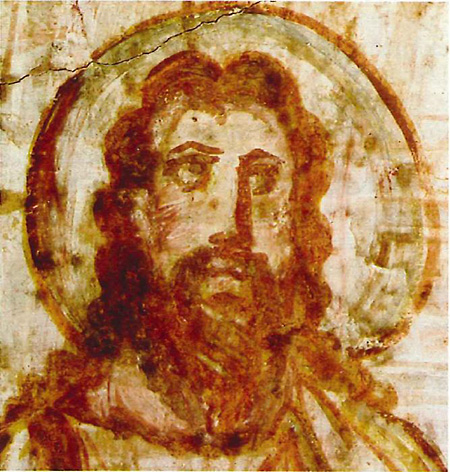
Image of Jesus from a catacomb in Rome, 3rd century AD.
Previous images had not attempted to depict him as a
Jewish Rabbi but had used a symbolical figure of a
shepherd with a sheep on his shoulders


Sunday, 16 March 2014

The Lord's Prayer

Mike Taylor
My brother Michael Taylor died last year, a few days before his 73rd birthday.  He had lived in a nursing home for six years, keeping the staff entertained and on the run, with his loud, cheerful and demanding voice, and his infectious laugh.  In the last months his health deteriorated rapidly. Always a gourmand, when he was no longer able to go to Gilmore's Hotel for grilled barramundi or steak dianne, the last real pleasure went out of his life.  As the end drew near, he rallied just long enough to send messages of love to people and say that he wanted us to sing "The Lord's My Shepherd" and play music of The Beatles at his funeral.  We stood around his bedside and prayed, led by our sister, the Revd Roberta Hamilton. The last word that our brother said was "Amen".  It was in response to the Lord's Prayer.

I have been reliably informed by young Evangelical Christians that we don't really need to learn the Lord's Prayer by heart.  One young man informed me confidently that in the future it will hardly be used any more. ..... and, although this might come as a surprise to some, in the Anglican Diocese of Sydney, this seems to be quite right.

The Sydney Diocese (for those who don't know) has a Bible College which sets the benchmark for how 21st Century Evangelical Ministry ought to operate.  A recent graduate of Moore College argued the point that the Lord's Prayer was given to us as an example of how to pray.  It didn't come with any obligation that it should be learnt by heart and repeated daily, or even repeated once every Sunday.  If we read the Lord's Prayer, and comprehend from reading it, how praying ought to be done, then we are free to pray our own prayers.  We can pray, safe in the knowledge that we know how to do it.  And, by this reasoning, a leader, in a church or community situation, knowing how to pray, can pray effectively for the congregation or group, and say what needs saying......... or can they?

Is there any reason for bothering to memorise the Lord's Prayer?  Is there any reason for using it, on occasions when Christians gather together, given that Jesus didn't actually command us to use it?


My son, who is now a Christian youth leader, went to a Christian school.  And for the six years that he was there, I went to services and functions. I don't recall ever praying the Lord's Prayer on any school occasion..... not once, even once, in those six years.  When parents were asked to comment on school matters, it was one of the things on which I wrote at length. To no avail.

My son goes to a large lively youth service at the local Christian auditorium, on Sunday evenings.  I do recall the Lord's Prayer being used once. It was on the occasion of Archbishop Peter Jensen's visit, and was the same day that the rector included the Apostle's Creed, and explained to the young people present that these two elements were traditional to Anglican Church worship, so we were going to repeat them, with the aid of the overhead screens, because, of course, none of the young people could be expected to know these things by heart.  In retrospect, Archbishop Peter may not have even noticed if they were omitted, since  he was previously the principal of Moore College, and may have had a part in encouraging his clergy in the understanding that they should make up their own prayers, rather than simply reciting what they have learnt.

I have already asked the question, is there a point in learning the Lord's Prayer (by heart, as they say), and continuing to use it?

My dying brother would encourage me to say, yes, there is!

It seems to me that there is an extraordinary degree of arrogance in the notion that we can dispense with  that which Christ himself gave us. This is the prayer of the person who, confronted with fear, agony or grief, can think of no other words.  This is the prayer of the aged and dying.   This is the prayer that remains when mind and memory fail.  This is the prayer that unites us as Christians across the world.

"No it's not," says my young Moore College graduate. "In point of fact, we are united by the Statement of Faith." (a.k.a. The Creed)
Well yes, that too!  But Jesus didn't give us the creed.  The creed is mankind's invention.  It's about Church. It isn't about God.  We don't "draw near to God" in the words of the Creed.  We draw near to God in prayer.

There has always been a place in both public and private worship for the custom-made prayer of the prayer leader or praying individual. We are encouraged to bring the "desires of our hearts" before God, in praise, thanks and petition. But does the priest or prayer leader know what the other praying individuals have in their hearts?

The arrogance of modern Evangelical leaders is that they think they have all the answers, all the time.  They obviously believe that the prayers that they utter, in front of, and on behalf of congregations, youth groups, school assemblies and so on, are able to fill all the needs every time; that after they have prayed, nothing is left undone, and no words remain to be said, on behalf of the group, to God.   The group listens and says "Amen". They say it, politely, whether everything has been covered, or not.  The group doesn't usually pray out loud, together, as a group, unless there is a prayer projected onto a screen that they can follow.  Nobody says, anymore, "As our Saviour Christ has taught us, we are confident to pray.....".  Young people are not taught, any more, so they are no longer "confident" to pray it.

The beauty of the prayer that Our Saviour taught us is that it covers all sorts of possibilities.  It states who it is to whom we pray: Our Father in Heaven.  It expresses his greatness and our trust in his wisdom and might. It sources our needs and petitions our forgiveness.  It acknowledges our weakness and seeks relief from our greatest fears.  Basically, it is the prayer that has everything covered.


Saturday, 26 November 2011

Love: 1 Corinthians 13


    As verger of St Stephen's Anglican Church, Newtown, I attended innumerable weddings. The Reverend Don Meadows and I made a good team.  While he welcomed, reassured, celebrated and preached, I parked cars, secured slipping veils, took flower-girls to the toilet, retied sashes, sorted out spats between mothers-in-law, distracted the odd drunk from disrupting the service, kept the neighbourhood kids quiet and played the carillon.

    Don had just one marriage sermon. He had refined it over the years and used it on every occasion, except when a member of his own congregation was getting married.  He preached it, at different degrees of complexity and with different inserted references to couples ranging from members of the law fraternity to a couple who met at a workshop for the intellectually disabled.  The sermon sought to encapsulate the Love of God in one easy and memorable lesson.

The personification of Charity and other Virtues
drew on the Classical tradition of the Muses.
    Of all the various wedding experiences that I had over the years, I most treasure an occasion when I heard the passage on Faith, Hope and Love from Paul's First Letter to the Corinthians, chapter 13, read superbly.  I was asked, before the service, to look out for the woman who was reading, because she was running rather late.  She was an actress, and they had asked her specially, because they were sure she would do it well. The Rector, I believe, had advised on a suitable passage of scripture.  

    The actress arrived in time, and when she stepped up to the lectern and smiled graciously, it was clear that something special was about to happen, but the impact of it upon the verger was unprecedented. This woman read St Paul's letter as if it was addressed to her personally, as if she had just received it from far away, opened it and was devouring it eagerly.  She read with growing excitement, with discernible joy, savouring each precious phrase of this, one of the best-known passages of the Bible, as if she was discovering it for the first time.    I was simply thrilled by the power of this actress, to convey all that, within the context of reading an epistle in church.  I told her so, after the service.
    The actress looked at me with a mixture of astonishment and delight. 
    "But, Dahling," she said "I was reading it for the first time! They left it till the last minute to ask me, and, as I don't own such a thing as a Bible, I had never read it before in my life!" 


Khalil Gibran and his spiritual poetry

   
    A later priest, under whom I served as verger, used often to include within the service a poetic reading by Khalil Gibran. I supposed I heard it almost as many times as I heard Don Meadow's sermon. But the sentiments, urging the married couple to stand apart like trees and let the wind blow through their love, never spoke to me of what I considered married love ought to be. I became convinced that, despite all the writing that he did on the subject, perhaps Khalil Gibran didn't understand love at all, and that some of his advice, taken in the context of marriage, may very well be seriously misconstrued.

    Gibran was born in the 19th century to a Maronite Christian family and migrated from Lebanon to the US. Much of Gibran's writings deal with Christianity, especially on the topic of spiritual love. But his mysticism is a convergence of several different influences : Christianity, Islam, Sufism, Hinduism and theosophy. His best known work is "The Prophet", 1923, and he is said to be the third most widely read poet in the world.

   Today I found a lengthy poem posted on another blog page.  Here is an excerpt:

When love beckons to you,  follow him,
Though his ways are hard and steep.
And when his wings enfold you yield to him,
Though the sword hidden among his pinions may wound you.
And when he speaks to you believe in him,
Though his voice may shatter your dreams
as the north wind lays waste the garden.


    The poem rolls on, piling image upon image, sometimes mentioning God, sometimes appearing without explanation, to have jumped from spiritual love to carnal desire and back again.

    Various comments have been made in praise of the beauty and spirituality of this poem.  However, I have quite a few problems with it. While the language uses appealing and seemingly deeply meaningful images, taken as a whole, it means nothing whatsoever. It is as intellectually satisfying as a mouthful of fairy floss.

    The poem obviously draws in part upon 1 Corinthians 13, and like much of Kahlil Gibran's writing, assumes pseudo-Biblical language and phrasing (in much the same way as 19th century translators of the Quran worded it in antiquated King James Version English to give it a "scriptural" feeling.) The words and imagery roll on in a most enticing manner. The content, however, is as hollow as the proverbial sounding brass and as shallow as the clashing cymbal.

    What is actually being said? What sort of love is being referred to?  Is this the profound love of God?   Is it the love that Christians are encouraged to have for one another?  Is it an all encompassing love for humanity?   Is it romantic love?  All these aspects of love are hinted at in passing.
If this poem is about spiritual love, then it fails to inform, to encourage or to sustain. It doesn't tell us that we are loved. It doesn't tell us how we should love. 

God as Love 

      In Christianity "God is Love".  Love is a primary attribute of God.   God is love just as God is truth and God is life.  Moreover, the love of God is distinguished in the Greek by the use of the word "agape" meaning that it is selfless, all-encompassing and voluntary.

    I am drawn to compare Gibran's poem with Francis Thompson's "The Hound of Heaven".  In this poem the writer is pursued by Love.  It becomes increasingly clear that the love which ceaselessly follows, despite all attempts to avoid, to hide, and to find satisfaction in other loves, is the Love of God. It is the selfless, enduring, forgiving love that is offered again and again, and eventually must be accepted.  
Love says:

Ah, fondest, blindest, weakest, 
I am He Whom thou seekest! 
Thou drivest love from thee, who drivest Me.


Christian symbols for Love 

The Pelican.  A symbol of Christ's love, dependent on a
misunderstanding of the habits of Pelicans. 
      Within the context of the Christian Church, there are a number of symbolic images that stand for "Love".  One is the image of the crucified Christ which says to the Christian, in the most graphic terms: "For God so loved the world that he gave his only begotten Son that whosoever believeth on Him should not perish but have everlasting life." 

     Another image of love, used since Medieval times, is that of the pelican with a nest full of young.   It was believed that the pelican so loved its young that it would pluck feathers from its own breast and feed the hatchlings on its blood.  The image of the pelican became the symbol of Christ's sacrificing love for the Church, and the pictorial motif is used particularly at churches with the dedication "Christ Church".

    The third image is that of Charity,  the "caritas" or caring love that evolved with the Latin translations of the Greek scriptures.  Charity, with her sister virtues of Faith and Hope, was to adorn many fresco, tomb and stained glass window, from the late Middle Ages through to the early 20th century.  All three, like other virtues, were given feminine persona.  Fide (or Faith) is depicted clinging to a large cross,  Spes (Hope) staunchly carries an anchor, while Caritas (Love) is a breast-feeding mother, often shown with twins.

Loving others

     In 1 Corinthians, chapter 13,  the message and its context are perfectly clear.  The context is not about what love can do to or for a person. The whole context of this passage is the necessity for a Christian person to have love for others.  Not a lustful love, not a one-on-one reciprocal love, but an enduring, selfless Christ-like love.     

    The Christian teaching does not make "love" an Eros-type persona, and talk about how it affects the one who yields to it.  In Christianity, the affect upon oneself is always down-played. The importance of love, and the reason why one needs to possess it, is entirely how it affects others.

    1 Corinthians 13 shows love to be a quality that a Christian person is fully obligated to possess, because if they do not, then all other gifts that they may have, are of little value.


"Love bears all things.....endures all things....
Love never ends." 
What are we told, in 1 Corinthians 13, are the characteristics of Love?


"Love is patient and kind; 
love is not jealous or boastful; 
it is not arrogant or rude. 
Love does not insist on its own way; 
it is not irritable or resentful; 
it does not rejoice at wrong, but rejoices in the right. 
Love bears all things, believes all things, 
hopes all things, endures all things. 
Love never ends..... 
So Faith, Hope and Love abide, these three; 
but the greatest of these is Love." 


NOTES:
The Crucifx of Archbishop Gero of Cologne, c. 970, Cologne Cathedral, is possibly the oldest extant large sculptured crucifix. The backing mandorla is modern.

The personifications of Faith, Hope, Charity, Truth, Justice, Temperance and other Biblical virtues or gifts of the spirit had a practical purpose. They were often publicly displayed, with their various attributes, such as the sword and scales of Justice, and the jugs of wine and water of Temperance, as statues around the exterior of public buildings and as decoration inside venues such as town halls, to remind both the public and those in power of their duty towards each other.

The pelican with its young formed part of the rich iconography of the Medieval Church and takes its place among the many and diverse small images that may be found as carvings in wood and stone within ancient church buildings. However, where one may find foxes, cats, bears, and wolves in all sorts of odd places, the pelican is nearly always displayed in an elevated position, having direct association with both the sacrificial nature of Christ's love, and with the Church itself.