Here is a video about nine of England's beautiful Madiaeval Cathedrals. They range from tiny little Christ Church Cathedral, Oxford, which is only as large as a parish church, to Norwich and Peterborough which are 48o feet long. All these cathedrals have been extensively restored during the 19th century, but all of them are substantially intact ancient buildings, with the exception of the spire at Chichester..... and thereby hangs a tale.
The Mediaeval spire at Chichester was 277 feet high, was completed in 1402, and could be seen from the English Channel and for miles across the countryside. In 1861, a small boy was appraoching Chichester on the train, when his Grandmother said to him "Look out and you will see the spire of Chichester Cathedral!"
He looked out, and saw the spire. And while he was watching, it suddenly caved in on itself, like a telescope. As it was a masonry spire, there was nothing left except a huge pile of rubble on the floor at the crossing of the cathedral. The people of the little cathedral city of Chichester were devastated at the loss of their famous landmark. The famous Gothic Revival architect, Sir George Gilbert Scott, rebuilt it, faithful to the original.
I mentioned her that Chichester is a "Cathedral City". That term is usually applied only when the town in which the Cathedral stands is too small to be a city in its own right. Some cathedrals stand in large towns that have always been cities, or have become cities because of industrial growth in the 18th and 19th centuries. Norwich, for example, has been a city for hundreds of years, but Chichester, for nearly a thousand years, has been a Cathedral City in which the entire population of the town can fit inside the cathedral itself.
Like the cathedrals of the previous video, most of these buildings were begun shortly after the Norman invasion, although several of them have been the location of cathedrals since the 7th century. All of them were extended in the Gothic period, with Peterborough remaining the most Norman, and only Lichfield being entirely Gothic.
Some of these cathedrals are remarkable for their overall lovlieness, such as Chichester, while others are renowned for an architectural feature which is either unique in England, such as the Early English Gothic West front of Peterborough, and the Reticular interior in the choir of Gloucester, or is a superb example such as the vault at Norwich, and the central tower at Worcester.
The cathedrals here are Chichester, Exeter, Gloucester (pr. Gloster), Lichfield, Norwich (pr. Norrich), Peterborough (pr. Peterbruh) , Ripon, Worcester (pr. Wooster like wood) and Oxford.
Showing posts with label Church. Show all posts
Showing posts with label Church. Show all posts
Sunday, 14 March 2021

Friday, 5 March 2021
The Mediaeval Cathedrals of England, Part 1
One of the delights of my life is visiting old churches and cathedrals.
Firstly, what exactly is a cathedral? Is it just another name for a very large church?
No. A cathedral is a church with a very special function - it contains the seat of a Bishop. From the Cathedral, the Bishop administers the churches of a region known as a Diocese.
The Bishop is not actually the Head Priest at the Cathedral; that role belongs to the Dean, who is assisted by Clergy and Layity called Canons.
Because Mediaeval England became unified politically at a comparatively early date, this also brought about a centralising of the church organisation. The result was that in England in the Late Middle Ages, there were far fewer cathedrals than in other countries, such as Italy and France, with Mediaeval England having about 18 cathedrals and France more than 180. In the 16th, 19th and 20th centuries, a number of churches that were ancient Abbeys have joined the ranks of cathedrals. More recently, a number of large parish churches have also become regional cathedrals, as the region around them became more populated.
Some cathedrals of England such as Salisbury, Durham, York and Wells, are internationslly renowned for the importance of their architecture. But among the less famous of the ancient buildings, every one of them has features that are remakable in some way.
Here is the first in a series of videos that shows some of the lesser known amoong the mediaeval buildings with their architecture and artworks.
No. A cathedral is a church with a very special function - it contains the seat of a Bishop. From the Cathedral, the Bishop administers the churches of a region known as a Diocese.
The Bishop is not actually the Head Priest at the Cathedral; that role belongs to the Dean, who is assisted by Clergy and Layity called Canons.
Because Mediaeval England became unified politically at a comparatively early date, this also brought about a centralising of the church organisation. The result was that in England in the Late Middle Ages, there were far fewer cathedrals than in other countries, such as Italy and France, with Mediaeval England having about 18 cathedrals and France more than 180. In the 16th, 19th and 20th centuries, a number of churches that were ancient Abbeys have joined the ranks of cathedrals. More recently, a number of large parish churches have also become regional cathedrals, as the region around them became more populated.
Some cathedrals of England such as Salisbury, Durham, York and Wells, are internationslly renowned for the importance of their architecture. But among the less famous of the ancient buildings, every one of them has features that are remakable in some way.
Here is the first in a series of videos that shows some of the lesser known amoong the mediaeval buildings with their architecture and artworks.
Friday, 24 March 2017
Jesus, did he exist? - thirty-three teachings that have stood the test of time
Here
are some of the teachings of a 1st century man, described in
literature, but claimed, by some, never to have existed. The teachings
seem very humane and sensible, and apart from the mentions of "God",
quite devoid of superstition. Taken on merit, these teaching are
evidence of a highly enlightened mind.
1. That God is a loving Father.
2. That like any loving father, God has expectations of his children.
3. That every person who walks this earth is your neighbour, and worthy of your kindness in times of trouble.
4. That you should treat others as you would like to be treated.
5. That showing loving kindness means responding to the needs of those around you- the lonely, the poor, the disadvantaged, the incapacitated and those who may be suffering as a result of their own doing.
6. That women should be educated, along with men, and have their voices heard, along with men
7.That the poor, the sick, the disabled, the mentally ill, the foreigner and the person who holds to a different faith have the same human rights as the majority.
8. That rape is totally abhorrent.
9. That ritual cleanliness/uncleanliness is a load of nonsense.
10. That the words that come out of a person's mouth are more important than whether the food that goes into it is kosher, halal or even tasty.
11. That everyone ought to have enough to live on, even if they cannot do a full days work.
12. That having a day off every week is good for people.
13. That you shouldn't fuss about your appearance.
14. That when someone does you an honour, you should respond appropriately.
15. That if someone is determined to act like an absolute dickhead, you should turn your back and walk away.
16. That being preoccupied with money can seriously get in the way of living a good life.
17. That before we criticise others, we ought to take a long look at ourselves.
18. That sometimes we have to use a good deal of courage to break from patterns of behaviour that are wrecking our lives.
19. That a sincere apology can turn around a situation.
20. That forgiveness is healing.
21. That greedy, disrespectful people need their butts kicked.
22. That bigots who think they are better than those around them have seriously missed the point.
23. That you can help a person who knows they need your help, so it is worth putting in the time with them.
24. That we are individuals, and what is good for one person might not be appropriate for another.
25. That there is no ordinary task that is beneath our dignity so if something needs cleaning up, then just do it.
26. That sharing a meal together, whether it is a formal dinner or a barbecue on the beach, is important for relationships.
27. That truly dangerous people can often be hard to recognise.
28. That a great leader is one who serves the people that he is leading.
29. That if what you have to say really matters, say it, even if you are despised for doing so.
30. That sometimes it is best to be silent.
31. That we may be called upon to make major sacrifices, for the good of others.
32. That death is not the end
33. That one good person really can make a very big difference.
1. That God is a loving Father.
2. That like any loving father, God has expectations of his children.
3. That every person who walks this earth is your neighbour, and worthy of your kindness in times of trouble.
4. That you should treat others as you would like to be treated.
5. That showing loving kindness means responding to the needs of those around you- the lonely, the poor, the disadvantaged, the incapacitated and those who may be suffering as a result of their own doing.
6. That women should be educated, along with men, and have their voices heard, along with men
7.That the poor, the sick, the disabled, the mentally ill, the foreigner and the person who holds to a different faith have the same human rights as the majority.
8. That rape is totally abhorrent.
9. That ritual cleanliness/uncleanliness is a load of nonsense.
10. That the words that come out of a person's mouth are more important than whether the food that goes into it is kosher, halal or even tasty.
11. That everyone ought to have enough to live on, even if they cannot do a full days work.
12. That having a day off every week is good for people.
13. That you shouldn't fuss about your appearance.
14. That when someone does you an honour, you should respond appropriately.
15. That if someone is determined to act like an absolute dickhead, you should turn your back and walk away.
16. That being preoccupied with money can seriously get in the way of living a good life.
17. That before we criticise others, we ought to take a long look at ourselves.
18. That sometimes we have to use a good deal of courage to break from patterns of behaviour that are wrecking our lives.
19. That a sincere apology can turn around a situation.
20. That forgiveness is healing.
21. That greedy, disrespectful people need their butts kicked.
22. That bigots who think they are better than those around them have seriously missed the point.
23. That you can help a person who knows they need your help, so it is worth putting in the time with them.
24. That we are individuals, and what is good for one person might not be appropriate for another.
25. That there is no ordinary task that is beneath our dignity so if something needs cleaning up, then just do it.
26. That sharing a meal together, whether it is a formal dinner or a barbecue on the beach, is important for relationships.
27. That truly dangerous people can often be hard to recognise.
28. That a great leader is one who serves the people that he is leading.
29. That if what you have to say really matters, say it, even if you are despised for doing so.
30. That sometimes it is best to be silent.
31. That we may be called upon to make major sacrifices, for the good of others.
32. That death is not the end
33. That one good person really can make a very big difference.
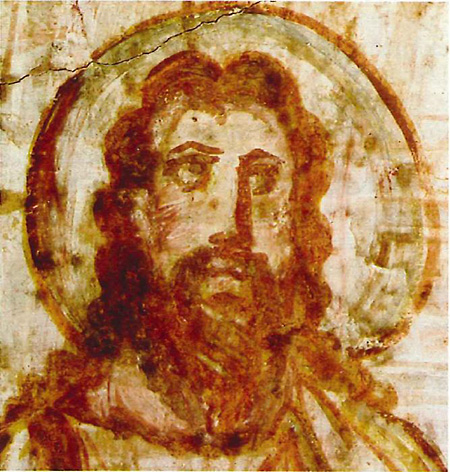 |
| Image of Jesus from a catacomb in Rome, 3rd century AD. Previous images had not attempted to depict him as a Jewish Rabbi but had used a symbolical figure of a shepherd with a sheep on his shoulders |
Wednesday, 13 January 2016
Homosexuality and the Bible
Homosexuality and the Bible
My suggestion, as always, is get back to the "Word of God".
Not that Jewish library of myths and legends, histories, law, old sayings, erotica, allegory, poetry and prophecy. And not the collection of letters by members of the early Christian Church, of whom Paul might well be seen as a "Doctor of the Church" along with Augustine, Gregory and the rest.
No. Get back to the true "Word of God". God's living "communication" with mankind. God's perfect example of how life should be lived. This is not about a "Book". It is about a “Message". It is not about "Theology". It's about "Life". Trust that through Jesus we know all that we need to know.
Question 1. If the words of Jesus, as written down for us by several witnesses, and the examples set by Jesus as likewise recorded, are sufficient, then what about the other stuff that constitutes "The Bible" aka "Holy Scripture" aka "The Word of God"? Is it factual? is it infallible? Does it matter?
A: God doesn't require perfection to work through us! Let us just thank God that he doesn't require perfection to work through us! The writers of those scriptures were seriously flawed people, just like us! The Holy Spirit doesn't "dictate". The Holy Spirit "inspires". ….. and so, with all the faults and flaws, the four Gospel accounts of Jesus continue to be the best possible source of information that we have about the love of God, and what he desires for us, and expects of us.
Question 2. If Jesus, as the incarnate Christ was/is the "Word" i.e. "Communication" of God, what did he actually communicate?
* He communicated that he accepted sinners. At least, he accepted sinners of ALMOST every class. The main sort of sinner that he showed a real disdain for was the hypocrite. The reason for this is fairly obvious. The sin of the hypocrite is personal deceit that breeds insurmountable intolerance towards other sinners.
* He communicated that nothing in the human condition shocked him and that no human was too foul for his touch. He challenged all prejudice of sex, race, cleanliness, orthodoxy. Not just the adulteress and the tax collector- the woman of the despised race of slave-traders was challenged to speak out against the prejudice of all around her. The Roman soldier who had a male servant, about whom he cared SO DEEPLY that he was prepared to grovel to an itinerant Jewish preacher, received Jesus' immediate reassurance.
*Jesus challenged the rules. Jesus was not locked into the values of "Religion". He made a strong case for common-sense and common-kindness. And since he demonstrated these values in such abundance, we need to develop them in ourselves.
*Jesus met people where they were at. He challenged the proud to bow down, the rich to be poor, the voiceless to speak out, and the gender-oppressed to act as equals. Jesus empowered people to mighty witness. The woman who touched his robe was healed; but more than that.... she witnessed, and was restored in the eyes of those to whom she was unclean.
*That story about that “Good” Samaritan”: the thing that set that Samaritan apart from the Priest and the Levite was that, like Jesus, Jewish ritual was not an obligation for him. He was free to touch that bleeding naked body, because he was not bound by religion or convention. The other two, in walking past, were simply fulfilling the requirement of the Law.
*The story about that Prodigal Father:... Yes, it was the father who was the real challenge to society. He accepted the socially unacceptable.
What I am saying here is that we are almost certainly wrong if we imagine that the love of homosexual people, and the expressions of love between homosexual partners would be unacceptable in the sight of Jesus. To condemn gender equality, to condemn what appears (scientifically) to be a God-given gender preference doesn't hold with the tolerance, the acceptance, the broadness of the love of Jesus, and the sort of loving acceptance that he led us to develop in ourselves. Neither does it seem possible for this intolerance to exist in the Divine nature of the Father, the Creator-God, whose message was embodied in Jesus. Surely Jesus didn’t get it wrong? Those four individual witnesses were awfully consistent in the way they depicted his character!
Question3: So what about the condemnation of the "sin of Sodom"?
The sin of Sodom, as enacted in the Old Testament has nothing to do with "gender preference". It has to do with the violent act of rape, still a major problem in the Middle East and Africa, and used to humiliate and intimidate those who do not conform, both male and female.
Sunday, 16 March 2014
The Lord's Prayer
 |
| Mike Taylor |
I have been reliably informed by young Evangelical Christians that we don't really need to learn the Lord's Prayer by heart. One young man informed me confidently that in the future it will hardly be used any more. ..... and, although this might come as a surprise to some, in the Anglican Diocese of Sydney, this seems to be quite right.
The Sydney Diocese (for those who don't know) has a Bible College which sets the benchmark for how 21st Century Evangelical Ministry ought to operate. A recent graduate of Moore College argued the point that the Lord's Prayer was given to us as an example of how to pray. It didn't come with any obligation that it should be learnt by heart and repeated daily, or even repeated once every Sunday. If we read the Lord's Prayer, and comprehend from reading it, how praying ought to be done, then we are free to pray our own prayers. We can pray, safe in the knowledge that we know how to do it. And, by this reasoning, a leader, in a church or community situation, knowing how to pray, can pray effectively for the congregation or group, and say what needs saying......... or can they?
Is there any reason for bothering to memorise the Lord's Prayer? Is there any reason for using it, on occasions when Christians gather together, given that Jesus didn't actually command us to use it?
My son, who is now a Christian youth leader, went to a Christian school. And for the six years that he was there, I went to services and functions. I don't recall ever praying the Lord's Prayer on any school occasion..... not once, even once, in those six years. When parents were asked to comment on school matters, it was one of the things on which I wrote at length. To no avail.
My son goes to a large lively youth service at the local Christian auditorium, on Sunday evenings. I do recall the Lord's Prayer being used once. It was on the occasion of Archbishop Peter Jensen's visit, and was the same day that the rector included the Apostle's Creed, and explained to the young people present that these two elements were traditional to Anglican Church worship, so we were going to repeat them, with the aid of the overhead screens, because, of course, none of the young people could be expected to know these things by heart. In retrospect, Archbishop Peter may not have even noticed if they were omitted, since he was previously the principal of Moore College, and may have had a part in encouraging his clergy in the understanding that they should make up their own prayers, rather than simply reciting what they have learnt.
I have already asked the question, is there a point in learning the Lord's Prayer (by heart, as they say), and continuing to use it?
My dying brother would encourage me to say, yes, there is!
It seems to me that there is an extraordinary degree of arrogance in the notion that we can dispense with that which Christ himself gave us. This is the prayer of the person who, confronted with fear, agony or grief, can think of no other words. This is the prayer of the aged and dying. This is the prayer that remains when mind and memory fail. This is the prayer that unites us as Christians across the world.
"No it's not," says my young Moore College graduate. "In point of fact, we are united by the Statement of Faith." (a.k.a. The Creed)
Well yes, that too! But Jesus didn't give us the creed. The creed is mankind's invention. It's about Church. It isn't about God. We don't "draw near to God" in the words of the Creed. We draw near to God in prayer.
There has always been a place in both public and private worship for the custom-made prayer of the prayer leader or praying individual. We are encouraged to bring the "desires of our hearts" before God, in praise, thanks and petition. But does the priest or prayer leader know what the other praying individuals have in their hearts?
The arrogance of modern Evangelical leaders is that they think they have all the answers, all the time. They obviously believe that the prayers that they utter, in front of, and on behalf of congregations, youth groups, school assemblies and so on, are able to fill all the needs every time; that after they have prayed, nothing is left undone, and no words remain to be said, on behalf of the group, to God. The group listens and says "Amen". They say it, politely, whether everything has been covered, or not. The group doesn't usually pray out loud, together, as a group, unless there is a prayer projected onto a screen that they can follow. Nobody says, anymore, "As our Saviour Christ has taught us, we are confident to pray.....". Young people are not taught, any more, so they are no longer "confident" to pray it.
The beauty of the prayer that Our Saviour taught us is that it covers all sorts of possibilities. It states who it is to whom we pray: Our Father in Heaven. It expresses his greatness and our trust in his wisdom and might. It sources our needs and petitions our forgiveness. It acknowledges our weakness and seeks relief from our greatest fears. Basically, it is the prayer that has everything covered.

Let all the World, in Every Corner, Sing!
"The power of art draws people to behold it. Good art bears its message into the soul through the imagination and begins to appeal to reason, for art makes ideas plausible. The quality of music and speech in worship will have a major impact on its evangelistic power. In many churches, the quality of the music is mediocre or poor, but it does not disturb the faithful. Their faith makes the words of the hymn or the song meaningful despite its artistically poor expression, and further, they usually have a personal relationship with the song leader and musicians. But any outsider who arrives not convinced of the truth and having no relationship to the music leaders will be bored or irritated by the poor offering. Excellent aesthetics includes outsiders, while mediocre or poor aesthetics exclude. The low level of artistic quality in many churches guarantees that only insiders will continue to come. To say this positively, the attraction of good art will play a major part in drawing non-Christians." (Tim Keller - Evangelistic Worship, p. 7).
"Excellent aesthetics includes
outsiders, while mediocre or poor aesthetics exclude." This is absolute nonsense!
For a start,
it is based on some preconceived notion of what is aesthetically excellent,
what is mediocre and what is poor.
One of the things that people of almost every type find
"inclusive" is participation.
A church with talented musicians and a great "up-front" music
team can suffer from an extreme lack of participation, simply because every
church service is a "performance". People don't "sing"; they simply "sing
along".
If you can get
ordinary people to sing "together", then you have something that
others will want to join in. The music can be as excellent as Handel's
Hallelujah Chorus, Bach's "Oh Sacred head sore wounded", or the magnificent
Wesley/Mendelsshon combo of "Hark the Herald Angels"; it can be as
corny as "Standing on the Promises" or "When the roll is called
up yonder"; as simple as "Wide wide as the ocean" or the Taize
chant "Laudate Dominum", or totally and utterly trite. But whatever the music may be, wherever
people sing with enthusiasm, others will join in, and in doing so, will be
included, just in the process of raising their voices as part of the multitude.
Modern styles of worship have
increasingly robbed worshippers of the pleasure of hearing their own voice
raised as one of many. Recitation of familiar prayers, including the Lord's
Prayer, is in many places a thing of the past. The voices of the young are
rarely raised together in that ancient statement of faith known as The Creed.
Familiar hymns that traditionally have been used to bond communities (young and
old) in times of grief or celebration have been forgotten in the provision of
stimulating entertainment for the young.
No. "Excellent
aesthetics" is one of the least considerations. Being able to join in
"The Lord's my Shepherd" with your mother, granny and other
mourners at your grandfather's
funeral is to be included. Standing there and fumbling because you don't know
it when you need it is to be excluded. Holding a Carol Service and using the
familiar carols but with modernised words and an up-beat rhythm excludes all
the people who only come once a year to bring their kids.
Putting a group out
the front who concentrates on producing a quality performance, is exclusive.
Putting just one leader whose primary job is not to play an instrument and sing
into a microphone, but to conduct the whole congregation is far more inclusive.
No-more than one person can lead congregational singing, unless the venue is so
big that people cannot see. There is nothing wrong with a backing group which
serves like a choir, but the minute they take front stage, you have lost your
congregational singing.
The traditional choral service such as are still used in cathedrals and collegiate churches across the world, are an effective way of getting congregations to sing. The choir doesn't face the congregation. They sing the responses (which
the congregation can join in) and when they do perform during a service, it is an "anthem" and it is clearly a "worship performance". The choir also leads the hymn-singing, which is generally done in
unison, with the choir breaking into parts in the last verse. The treble line
that is produced in the final verse is intended specifically to complement the
unison singing of a congregation of ordinary untrained singers. Being part of
the congregation when the choristers suddenly break loose in a great hymn can
be thrilling, but it is the general rumble of untrained voices that is the
essential component, not the choir.
I will put some of my favourite hymn-singing clips on my page.
Some of my favourite Youtube Hymn-singing:
http://www.youtube.com/watch?v=9R5vyetZFoI "Guide me, O Thou Great Jehovah" from Wales. Jesus would have been right in the middle of this.
http://www.youtube.com/watch?v=_TgfhYsmGEQ
a very enthusiastic Easter Anthem
Taize from Notre Dame, Paris
This is what a well-trained congregation
can do!
The words and music of this hymn are as
trite as they come. The singing is delightful!
Pope Benedict really enjoyed his visit to
Westminster Abbey. The name of the
tune, appropriately, is “Westminster Abbey” by Purcell, and the words “Christ
is made the sure foundation”. The grave with the poppies is that of the Unknown
Soldier. This was a great moment for ecumenism.
The very poor video is of a wonderful and glorious moment in the history of Christianity. "Shine Jesus Shine" at the inaugural service
at Our Lady of the Rosary, first Christian Church in Qatar, an Islamic state on a peninsular in the Persian Gulf. The Catholic congregation is
mainly domestic servants and workers from the Philippines and other parts of
South East Asia.
https://www.youtube.com/watch?v=xuQjpbdx6TYSaturday, 26 November 2011
Love: 1 Corinthians 13
As verger of St Stephen's Anglican Church, Newtown, I attended innumerable weddings. The Reverend Don Meadows and I made a good team. While he welcomed, reassured, celebrated and preached, I parked cars, secured slipping veils, took flower-girls to the toilet, retied sashes, sorted out spats between mothers-in-law, distracted the odd drunk from disrupting the service, kept the neighbourhood kids quiet and played the carillon.
Don had just one marriage sermon. He had refined it over the years and used it on every occasion, except when a member of his own congregation was getting married. He preached it, at different degrees of complexity and with different inserted references to couples ranging from members of the law fraternity to a couple who met at a workshop for the intellectually disabled. The sermon sought to encapsulate the Love of God in one easy and memorable lesson.
Of all the various wedding experiences that I had over the years, I most treasure an occasion when I heard the passage on Faith, Hope and Love from Paul's First Letter to the Corinthians, chapter 13, read superbly. I was asked, before the service, to look out for the woman who was reading, because she was running rather late. She was an actress, and they had asked her specially, because they were sure she would do it well. The Rector, I believe, had advised on a suitable passage of scripture.
 |
| The personification of Charity and other Virtues drew on the Classical tradition of the Muses. |
The actress arrived in time, and when she stepped up to the lectern and smiled graciously, it was clear that something special was about to happen, but the impact of it upon the verger was unprecedented. This woman read St Paul's letter as if it was addressed to her personally, as if she had just received it from far away, opened it and was devouring it eagerly. She read with growing excitement, with discernible joy, savouring each precious phrase of this, one of the best-known passages of the Bible, as if she was discovering it for the first time. I was simply thrilled by the power of this actress, to convey all that, within the context of reading an epistle in church. I told her so, after the service.
The actress looked at me with a mixture of astonishment and delight.
"But, Dahling," she said "I was reading it for the first time! They left it till the last minute to ask me, and, as I don't own such a thing as a Bible, I had never read it before in my life!"
A later priest, under whom I served as verger, used often to include within the service a poetic reading by Khalil Gibran. I supposed I heard it almost as many times as I heard Don Meadow's sermon. But the sentiments, urging the married couple to stand apart like trees and let the wind blow through their love, never spoke to me of what I considered married love ought to be. I became convinced that, despite all the writing that he did on the subject, perhaps Khalil Gibran didn't understand love at all, and that some of his advice, taken in the context of marriage, may very well be seriously misconstrued.
Gibran was born in the 19th century to a Maronite Christian family and migrated from Lebanon to the US. Much of Gibran's writings deal with Christianity, especially on the topic of spiritual love. But his mysticism is a convergence of several different influences : Christianity, Islam, Sufism, Hinduism and theosophy. His best known work is "The Prophet", 1923, and he is said to be the third most widely read poet in the world.
Today I found a lengthy poem posted on another blog page. Here is an excerpt:
The poem rolls on, piling image upon image, sometimes mentioning God, sometimes appearing without explanation, to have jumped from spiritual love to carnal desire and back again.
Various comments have been made in praise of the beauty and spirituality of this poem. However, I have quite a few problems with it. While the language uses appealing and seemingly deeply meaningful images, taken as a whole, it means nothing whatsoever. It is as intellectually satisfying as a mouthful of fairy floss.
The poem obviously draws in part upon 1 Corinthians 13, and like much of Kahlil Gibran's writing, assumes pseudo-Biblical language and phrasing (in much the same way as 19th century translators of the Quran worded it in antiquated King James Version English to give it a "scriptural" feeling.) The words and imagery roll on in a most enticing manner. The content, however, is as hollow as the proverbial sounding brass and as shallow as the clashing cymbal.
"But, Dahling," she said "I was reading it for the first time! They left it till the last minute to ask me, and, as I don't own such a thing as a Bible, I had never read it before in my life!"
Khalil Gibran and his spiritual poetry
A later priest, under whom I served as verger, used often to include within the service a poetic reading by Khalil Gibran. I supposed I heard it almost as many times as I heard Don Meadow's sermon. But the sentiments, urging the married couple to stand apart like trees and let the wind blow through their love, never spoke to me of what I considered married love ought to be. I became convinced that, despite all the writing that he did on the subject, perhaps Khalil Gibran didn't understand love at all, and that some of his advice, taken in the context of marriage, may very well be seriously misconstrued.
Gibran was born in the 19th century to a Maronite Christian family and migrated from Lebanon to the US. Much of Gibran's writings deal with Christianity, especially on the topic of spiritual love. But his mysticism is a convergence of several different influences : Christianity, Islam, Sufism, Hinduism and theosophy. His best known work is "The Prophet", 1923, and he is said to be the third most widely read poet in the world.
Today I found a lengthy poem posted on another blog page. Here is an excerpt:
When love beckons to you, follow him,
Though his ways are hard and steep.
And when his wings enfold you yield to him,
Though the sword hidden among his pinions may wound you.
And when he speaks to you believe in him,
Though his voice may shatter your dreams
as the north wind lays waste the garden.
The poem rolls on, piling image upon image, sometimes mentioning God, sometimes appearing without explanation, to have jumped from spiritual love to carnal desire and back again.
Various comments have been made in praise of the beauty and spirituality of this poem. However, I have quite a few problems with it. While the language uses appealing and seemingly deeply meaningful images, taken as a whole, it means nothing whatsoever. It is as intellectually satisfying as a mouthful of fairy floss.
The poem obviously draws in part upon 1 Corinthians 13, and like much of Kahlil Gibran's writing, assumes pseudo-Biblical language and phrasing (in much the same way as 19th century translators of the Quran worded it in antiquated King James Version English to give it a "scriptural" feeling.) The words and imagery roll on in a most enticing manner. The content, however, is as hollow as the proverbial sounding brass and as shallow as the clashing cymbal.
What is actually being said? What sort of love is being referred to? Is this the profound love of God? Is it the love that Christians are encouraged to have for one another? Is it an all encompassing love for humanity? Is it romantic love? All these aspects of love are hinted at in passing.
If this poem is about spiritual love, then it fails to inform, to encourage or to sustain. It doesn't tell us that we are loved. It doesn't tell us how we should love.
God as Love
In Christianity "God is Love". Love is a primary attribute of God. God is love just as God is truth and God is life. Moreover, the love of God is distinguished in the Greek by the use of the word "agape" meaning that it is selfless, all-encompassing and voluntary.
I am drawn to compare Gibran's poem with Francis Thompson's "The Hound of Heaven". In this poem the writer is pursued by Love. It becomes increasingly clear that the love which ceaselessly follows, despite all attempts to avoid, to hide, and to find satisfaction in other loves, is the Love of God. It is the selfless, enduring, forgiving love that is offered again and again, and eventually must be accepted.
Love says:
Ah, fondest, blindest, weakest,
I am He Whom thou seekest!
Thou drivest love from thee, who drivest Me.
Christian symbols for Love
Within the context of the Christian Church, there are a number of symbolic images that stand for "Love". One is the image of the crucified Christ which says to the Christian, in the most graphic terms: "For God so loved the world that he gave his only begotten Son that whosoever believeth on Him should not perish but have everlasting life."
Another image of love, used since Medieval times, is that of the pelican with a nest full of young. It was believed that the pelican so loved its young that it would pluck feathers from its own breast and feed the hatchlings on its blood. The image of the pelican became the symbol of Christ's sacrificing love for the Church, and the pictorial motif is used particularly at churches with the dedication "Christ Church".
The third image is that of Charity, the "caritas" or caring love that evolved with the Latin translations of the Greek scriptures. Charity, with her sister virtues of Faith and Hope, was to adorn many fresco, tomb and stained glass window, from the late Middle Ages through to the early 20th century. All three, like other virtues, were given feminine persona. Fide (or Faith) is depicted clinging to a large cross, Spes (Hope) staunchly carries an anchor, while Caritas (Love) is a breast-feeding mother, often shown with twins.
 |
| The Pelican. A symbol of Christ's love, dependent on a misunderstanding of the habits of Pelicans. |
Another image of love, used since Medieval times, is that of the pelican with a nest full of young. It was believed that the pelican so loved its young that it would pluck feathers from its own breast and feed the hatchlings on its blood. The image of the pelican became the symbol of Christ's sacrificing love for the Church, and the pictorial motif is used particularly at churches with the dedication "Christ Church".
The third image is that of Charity, the "caritas" or caring love that evolved with the Latin translations of the Greek scriptures. Charity, with her sister virtues of Faith and Hope, was to adorn many fresco, tomb and stained glass window, from the late Middle Ages through to the early 20th century. All three, like other virtues, were given feminine persona. Fide (or Faith) is depicted clinging to a large cross, Spes (Hope) staunchly carries an anchor, while Caritas (Love) is a breast-feeding mother, often shown with twins.
Loving others
In 1 Corinthians, chapter 13, the message and its context are perfectly clear. The context is not about what love can do to or for a person. The whole context of this passage is the necessity for a Christian person to have love for others. Not a lustful love, not a one-on-one reciprocal love, but an enduring, selfless Christ-like love.
The Christian teaching does not make "love" an Eros-type persona, and talk about how it affects the one who yields to it. In Christianity, the affect upon oneself is always down-played. The importance of love, and the reason why one needs to possess it, is entirely how it affects others.
The Christian teaching does not make "love" an Eros-type persona, and talk about how it affects the one who yields to it. In Christianity, the affect upon oneself is always down-played. The importance of love, and the reason why one needs to possess it, is entirely how it affects others.
1 Corinthians 13 shows love to be a quality that a Christian person is fully obligated to possess, because if they do not, then all other gifts that they may have, are of little value.
What are we told, in 1 Corinthians 13, are the characteristics of Love?
NOTES:
The Crucifx of Archbishop Gero of Cologne, c. 970, Cologne Cathedral, is possibly the oldest extant large sculptured crucifix. The backing mandorla is modern.
The personifications of Faith, Hope, Charity, Truth, Justice, Temperance and other Biblical virtues or gifts of the spirit had a practical purpose. They were often publicly displayed, with their various attributes, such as the sword and scales of Justice, and the jugs of wine and water of Temperance, as statues around the exterior of public buildings and as decoration inside venues such as town halls, to remind both the public and those in power of their duty towards each other.
 |
"Love bears all things.....endures all things.... Love never ends." |
"Love is patient and kind;
love is not jealous or boastful;
it is not arrogant or rude.
Love does not insist on its own way;
it is not irritable or resentful;
it does not rejoice at wrong, but rejoices in the right.
Love bears all things, believes all things,
hopes all things, endures all things.
Love never ends.....
So Faith, Hope and Love abide, these three;
but the greatest of these is Love."
NOTES:
The Crucifx of Archbishop Gero of Cologne, c. 970, Cologne Cathedral, is possibly the oldest extant large sculptured crucifix. The backing mandorla is modern.
The personifications of Faith, Hope, Charity, Truth, Justice, Temperance and other Biblical virtues or gifts of the spirit had a practical purpose. They were often publicly displayed, with their various attributes, such as the sword and scales of Justice, and the jugs of wine and water of Temperance, as statues around the exterior of public buildings and as decoration inside venues such as town halls, to remind both the public and those in power of their duty towards each other.
The pelican with its young formed part of the rich iconography of the Medieval Church and takes its place among the many and diverse small images that may be found as carvings in wood and stone within ancient church buildings. However, where one may find foxes, cats, bears, and wolves in all sorts of odd places, the pelican is nearly always displayed in an elevated position, having direct association with both the sacrificial nature of Christ's love, and with the Church itself.
Saturday, 17 September 2011
A guide to Anglican Liturgy for young Sydney Anglicans
NOTE: Some Anglicans from beyond the boundaries of the Diocese of Sydney might be bemused that I should write this, but trust me, there are many young people in Sydney who go to Anglican churches regularly, but have never attended a liturgical service.
This is for young persons who don't understand the role played by Anglican prayer books and those "old-fashioned" church services
The Anglican liturgy is a set way of conducting a church service. The various services that can be used are printed in Anglican prayer books, the old "Book of Common Prayer" and the more recent "A Prayer Book for Australia". They are based directly upon the Bible and reiterrate biblical teaching.
The Anglican liturgy was written specifically for participation by the congregation. Throughout each service of worship, the minister reads the service and the congregation responds aloud.
What happens in a "prayer book" church service ?
A liturgical service leads the congregation, with the minister, through a series of stages of worship. The purpose of being at church is all stated by the minister at the beginning.
What happens in a "prayer book" church service ?
A liturgical service leads the congregation, with the minister, through a series of stages of worship. The purpose of being at church is all stated by the minister at the beginning.
• After a verse of Scripture, he/she says "We are all here to: 1. Thank God! 2. Praise God! 3. Listen to God's word! 4. Pray to God! ....but first, we have to remember that we are sinners and ask forgiveness." ....All Biblical Stuff, OK? and that is just the beginning! Each one of these themes is then taken up within the course of the church service.
• After the minister and congregation have all prayed a prayer in which they acknowledge their failings before God and ask forgiveness, the minister assures them of God's will to receive those who come to him in real penitence.
• And they all say the "Lord's Prayer", the same one Jesus taught the disciples, and which, outside of Sydney, every other Christian person in the Whole Wide World has learnt to say by heart. It is something that across the world draws all Christians together, whether they be Anglican, Protestant, Catholic, Orthodox.... Can you imagine what it's like to be at a gathering where there are Christians from all over the world who pray the same words, all in different languages? So if you are one of the young Sydney Anglicans who don't know this prayer, then my advice is learn it, because joining in with 50 thousand other Christians all praying it together might be the biggest buzz of your life!
• Then there are the Bible readings. There are two of them, or three of them, depending on the choice of the minister. But they always have a theme, and the theme follows through into a special prayer called the "Collect". Generally two readings are read by people in the congregation, and one is read by the person who is going to preach.
• In between the readings there's the Psalm and the Canticles. The Psalm is always on the theme of the readings. It's a song of praise straight out of the Bible book of the same name. The Canticles are old Hymns of Praise, some of which are in the Bible and some which were used by the Early Christian Church. The tunes are really rather easy, but the pattern is kind-of old- fashioned because the sentences are all different lengths and there is a trick to knowing how to make them fit the tune. In cathedrals they are sung with the help of a choir, but in most churches the congregation and minister just read them aloud. The psalm is usually read alternating verse by verse with the leader and the people ....Hey! That's a lot of participation for the congregation, isn't it?
• The service continues with the Creed, which is a Bible-based statement of what Christians believe. Everybody says it together, standing up. It begins: "I believe in God, the Father Almighty, maker of Heaven and Earth......" Good stuff, OK?
• Then there are things called responses, which are short little prayers that everybody knows and say alternately with the minister.
• And there is always a time for the church messages and for people to ask for prayer and tell good news and all that stuff.
• And there are a few set prayers. There is a prayer for Peace, and a prayer for Grace. Or at night, there is a prayer for protection against danger. One is a rather old-fashioned prayer for the Queen. That is usually extended into a prayer for people in responsible positions, like the Prime Minister and even the local council. There is also a great prayer about "all sorts and conditions of men"... in which there is often a pause where you can name people or matters you want prayer for.
• And it all finishes with a Blessing that comes straight from the Bible.
• So, where do you hear from "The Word of God"? Is that what you are asking? Well, the whole lot is based on the Bible, or quotes directly from the Bible, but just so the Minister gets a go, there is time for a Sermon. Which is based on the Readings. Of Course..... but the minister can choose different readings, if he wants to, because even though there is a recommendation, they are not set in cement.
More about the Services:
There are two main types, so you either Do, or Don't have a Communion Service. Cathedrals always have at least one Communion Service on Sunday and at least one during the week, but small churches, particularly branch churches, only have Communion once a month. What's Communion? It's where you celebrate Jesus' Last Supper with his disciples. If you are a young Sydney Anglican and you've never done this, then find a church where they do it and go along.
More about the Readings:
• The readings that are set for Non-Communion services are on a yearly cycle, and are different in the evening to the morning. So if you read the four readings for every day of the week, then you read nearly all the New Testament, and a lot of the Old Testament in a year. And you do it in a way that links them together.
• The readings set for Communion Services are on a three year cycle, so you get the same set of readings every three years.
Purpose of the readings:
We all know about Christmas and Easter, but there are lots of other times of year that are celebrated in other churches, and which are often ignored in Anglican churches in Sydney.
One of the things that the readings do is guide you through the Year of the Church and give you something different to think about in each season.
• So the Year doesn't start at New Year, or even at Christmas. It starts 4 weeks before Christmas with Advent (Advent Calendars, right?). That's 4 weeks preparation... for what? Christmas Beano? ...Nope!... 4 weeks thinking about the return of Christ! Hey, that's scary! 4 whole weeks being told "Prepare the way! Get your act together! Jesus is coming!"
• Then you get Christmas and we all know about that.
• But after Christmas, the Bible readings give you, in order, Stephen the First Martyr, The Day of St John the Evangelist, the Massacre of the Babies of Bethlehem, the presentation of Jesus at the Temple and, on the twelfth day of Christmas, the Wise Men. (Hey, weren't they at Christmas? No!) Then there are a series of Bible readings which describe the teachings of Jesus and important aspects of Christian living such as Faith, Hope and Love; trusting in the Lord, following his way, and proclaiming the Gospel.
• From there, the year moves on, reminding you for 40 days before Easter, that you must repent, put yourself aside, think of others and prepare. These 40 days are called Lent.
• But the 40 days are broken up by a bit of rejoicing! Palm Sunday! Does your church do Palm Sunday, and get all the Sunday School and creche kids into church, waving branches and shouting Hosanna!? If not, do it next year!
• Easter starts on the Thursday night when you celebrate Jesus' last Supper. By tradition, the service ends with everyone leaving quietly, not shaking hands, and all the lights of the church going out one by one. Some churches also celebrate the way Jesus washed his disciples' feet, by having the minister and members of the Congregation wash each other's feet. It's a really good opportunity to make up with someone you've been in a state of conflict with.
• On Friday, you are back at church again. This time there is no Communion. Many churches do a very long prayer, called the Litany, which the congregation joins in, to ask for God's mercy. A very special part of this service is the reading of the Gospel, which is the longest reading of the year, and tells the story of the betrayal, trial and crucifixion. Some churches like to do this reading dramatically with several readers, and with the whole congregation taking the part of the mob that shouts "Crucify him!"
• Then of course, Easter Sunday is the big day of rejoicing!
• So what do you have to think about after Easter? The readings go on to lead you through the celebration of Jesus' Ascension, through Jesus' teachings, and through the coming of the Holy Spirit.
Other days are set to remember certain concepts like the Holy Trinity, and the life and witness of particular saints, both saints from the Bible, like Peter and Paul, and other people who lived wonderful Christian lives, like St Francis of Assisi. The 1st of November celebrates All Hallows' Day in honour of all the Christian people who have lived before us. (Halloween means All Hallows' Eve) And then, after the Day of Christ the King, you are back to Advent again.
So how does a liturgical service differ from a non-liturgical service?
Other days are set to remember certain concepts like the Holy Trinity, and the life and witness of particular saints, both saints from the Bible, like Peter and Paul, and other people who lived wonderful Christian lives, like St Francis of Assisi. The 1st of November celebrates All Hallows' Day in honour of all the Christian people who have lived before us. (Halloween means All Hallows' Eve) And then, after the Day of Christ the King, you are back to Advent again.
So how does a liturgical service differ from a non-liturgical service?
• You, the church member, always get to thank, praise, humbly confess sins, boldly state your faith, join in with the prayer that Jesus taught, listen to at least 2 Bible readings and a prayer that are thematically linked. You always get to participate.
• If the preacher is a hopeless preacher, or you really don't agree with their particular slant on the word of God, well, it doesn't matter quite so much, because the liturgy itself has real Bible teaching. The success of the teaching doesn't just depend on the talent of the person who is up the front.
• It is a God focussed service that takes the emphasis off the personal skills and personal charisma of the person leading the service.
Subscribe to:
Posts (Atom)