Here is a video about nine of England's beautiful Madiaeval Cathedrals. They range from tiny little Christ Church Cathedral, Oxford, which is only as large as a parish church, to Norwich and Peterborough which are 48o feet long. All these cathedrals have been extensively restored during the 19th century, but all of them are substantially intact ancient buildings, with the exception of the spire at Chichester..... and thereby hangs a tale.
The Mediaeval spire at Chichester was 277 feet high, was completed in 1402, and could be seen from the English Channel and for miles across the countryside. In 1861, a small boy was appraoching Chichester on the train, when his Grandmother said to him "Look out and you will see the spire of Chichester Cathedral!"
He looked out, and saw the spire. And while he was watching, it suddenly caved in on itself, like a telescope. As it was a masonry spire, there was nothing left except a huge pile of rubble on the floor at the crossing of the cathedral. The people of the little cathedral city of Chichester were devastated at the loss of their famous landmark. The famous Gothic Revival architect, Sir George Gilbert Scott, rebuilt it, faithful to the original.
I mentioned her that Chichester is a "Cathedral City". That term is usually applied only when the town in which the Cathedral stands is too small to be a city in its own right. Some cathedrals stand in large towns that have always been cities, or have become cities because of industrial growth in the 18th and 19th centuries. Norwich, for example, has been a city for hundreds of years, but Chichester, for nearly a thousand years, has been a Cathedral City in which the entire population of the town can fit inside the cathedral itself.
Like the cathedrals of the previous video, most of these buildings were begun shortly after the Norman invasion, although several of them have been the location of cathedrals since the 7th century. All of them were extended in the Gothic period, with Peterborough remaining the most Norman, and only Lichfield being entirely Gothic.
Some of these cathedrals are remarkable for their overall lovlieness, such as Chichester, while others are renowned for an architectural feature which is either unique in England, such as the Early English Gothic West front of Peterborough, and the Reticular interior in the choir of Gloucester, or is a superb example such as the vault at Norwich, and the central tower at Worcester.
The cathedrals here are Chichester, Exeter, Gloucester (pr. Gloster), Lichfield, Norwich (pr. Norrich), Peterborough (pr. Peterbruh) , Ripon, Worcester (pr. Wooster like wood) and Oxford.
Sunday, 14 March 2021

Friday, 5 March 2021
The Mediaeval Cathedrals of England, Part 1
One of the delights of my life is visiting old churches and cathedrals.
Firstly, what exactly is a cathedral? Is it just another name for a very large church?
No. A cathedral is a church with a very special function - it contains the seat of a Bishop. From the Cathedral, the Bishop administers the churches of a region known as a Diocese.
The Bishop is not actually the Head Priest at the Cathedral; that role belongs to the Dean, who is assisted by Clergy and Layity called Canons.
Because Mediaeval England became unified politically at a comparatively early date, this also brought about a centralising of the church organisation. The result was that in England in the Late Middle Ages, there were far fewer cathedrals than in other countries, such as Italy and France, with Mediaeval England having about 18 cathedrals and France more than 180. In the 16th, 19th and 20th centuries, a number of churches that were ancient Abbeys have joined the ranks of cathedrals. More recently, a number of large parish churches have also become regional cathedrals, as the region around them became more populated.
Some cathedrals of England such as Salisbury, Durham, York and Wells, are internationslly renowned for the importance of their architecture. But among the less famous of the ancient buildings, every one of them has features that are remakable in some way.
Here is the first in a series of videos that shows some of the lesser known amoong the mediaeval buildings with their architecture and artworks.
No. A cathedral is a church with a very special function - it contains the seat of a Bishop. From the Cathedral, the Bishop administers the churches of a region known as a Diocese.
The Bishop is not actually the Head Priest at the Cathedral; that role belongs to the Dean, who is assisted by Clergy and Layity called Canons.
Because Mediaeval England became unified politically at a comparatively early date, this also brought about a centralising of the church organisation. The result was that in England in the Late Middle Ages, there were far fewer cathedrals than in other countries, such as Italy and France, with Mediaeval England having about 18 cathedrals and France more than 180. In the 16th, 19th and 20th centuries, a number of churches that were ancient Abbeys have joined the ranks of cathedrals. More recently, a number of large parish churches have also become regional cathedrals, as the region around them became more populated.
Some cathedrals of England such as Salisbury, Durham, York and Wells, are internationslly renowned for the importance of their architecture. But among the less famous of the ancient buildings, every one of them has features that are remakable in some way.
Here is the first in a series of videos that shows some of the lesser known amoong the mediaeval buildings with their architecture and artworks.
Monday, 3 April 2017
Together, we can work for good, or for evil.
 |
| What if your cow falls down the well on a Sabbath? Luckily this cow survived! |
I do not hold with much Evangelical teaching. I believe it is focussed too much on referring to a book, reverently known as "The Word of God" and much too little on the teachings and examples of the Christ, referred to by John the Evangelist as "The Word of God".
I have been advised against "hardening ones heart against the Word of God".i.e. the Bible, and in particular the Old Testament. By this the writer of the advice was expressing doubt in my faith
As Christians, we don't need to waste our time asking God to unravel all the apparent contradictions of the Old Testament. Once we free ourselves from the notion that God himself dictated it, then the contradictions don't seem very important. Neither do we need to suffer confusion over the many things that Paul wrote that do not tie up with what Jesus said and the examples that he set us.
The bottom line is, be an apostle of Jesus, not an apostle of Paul.
The reason WHY we do not need to unravel all this stuff is that JESUS unravelled it in one simple explanation.
The scholars who knew the Hebrew Scriptures backwards-forwards tried to trap him many times.
The key moment is when they asked "What is the most important Commandment?"
They were expecting him to select one from the Ten Commandments in the Book of Exodus, which everyone present would have known by heart
But he did NOT. He quoted from Deuteronomy, the verse that was so beloved by the scribes themselves that they wore it at all times:
"Love God with all your heart and mind and strength!"
The scribes and Pharisees might not have been expecting this answer, but EVERYONE would have been satisfied with it.
But wait a bit! Jesus is not finished! "There is another commandment JUST AS IMPORTANT!"
And at THIS point they start to wonder what he will say next!
"Love your neighbour as yourself!"
And while they are still wondering, he puts even more weight on the fact that these are EQUALLY important.
"On these TWO hang all the law and the teachings of the prophets!"
OK. These are the two things that MATTER. Nothing else really does.
Jesus elaborated on the fact that you shouldn't sweat the small stuff. He made it clear that anything that doesn't comply with kindness and common sense really doesn't count for much in the sight of God.
Praying loudly doesn't impress God. Eating Kosher food doesn't impress God. Keeping the Sabbath in a ritual manner doesn't impress God. Treating women in a lesser way than men doesn't impress God. You cannot buy bonus points, with God.
BUT, God is a loving father, and like any good parent, he has expectations.
Are his expectations about holiness and righteousness, about how many times you pray or whether you go to church? No they are not!
God's expectations are that you feed the hungry, tend the sick, be hospitable to strangers, remember to keep contact with people who are in gaol or who have fallen into disgrace of some sort, visit the dying. etc.
In today's world, your attitude towards refugees, homeless people, people with addictions, and people with mental health issues are all covered by God's broad expectations.
Basically, Jesus cut through the crap.
One of the lines that I really enjoy is the bit where the disciples are accused of working on the Sabbath, and Jesus says something totally OUTRAGEOUS- God gave one day off in seven for the benefit of mankind. Mankind doesn't exist for the benefit of keeping one day a week Holy! Hey, he is talking like a member of the labour movement!
And.... "So, what if your cow falls down the well on the Sabbath?"
Imagine this scene. If they leave the cow there, it will die. The man will loose his valuable asset and the well will be poisoned.
So all the neighbours run to get ropes and crowbars and planks of wood and shovels. They all fight about how it should be done. There is yelling and swearing and loud bellowing from the cow, and things going wrong.
When the cow is finally out, they all flop around and drink every bit of wine in the man's house. And the neighbouring women run with all the food they prepared for the Sabbath, and it turns into one big neighbourhood party. Very few things could be more noisy or neighbourly, or harder work, than pulling a cow out of a well.
Today, I am grieving over an incident that happened yesterday in Croydon, London.
A young migrant teenager was set on by a group of young men and women. Some of them beat him to the ground and together they kicked him until they had fractured his skull, severely injured his face and caused a clot to his brain. Some of the young people, between ten and twenty of them, were spectators, while eight to ten others were responsible for the attack. They only stopped and ran away when they heard police sirens.
The terrible act is being treated as a "hate crime", but we do not know yet why that poor lad was the victim of hate. Was it because he was Kurdish, or Muslim, or Iranian, or a refugee, or foreign, or was it because he looked like an easy target? Like the men pulling a cow out of the well, this was an unprepared event, where the participants co-ordinated themselves for a joint action with remarkable speed. And like the men in the hypothetical cow situation, they probably would have celebrated when it was over, if they were not fearing that they would be arrested.
So far, ten young people have been questioned, and one released. They may be charged with "attempted murder". My prayer for these young people is that somehow God will find a way to touch their hearts and turn their lives around.
Think how much Good these young people could do, if they made a co-ordinated attempt to welcome new refuge neighbours into the community!
What could ten energetic young people achieve, if they were to prepare a house for an incoming refugee family?
Wednesday, 29 March 2017
What is the Old Testament really about?
I know that fundamentalist Christians are not going to like what I say, but if you hang in there and absorb this, you will realise that you can go right on believing, while still changing your view of the Bible, and accepting a more rational one.
The Old Testament is a wonderful LIBRARY of ancient Jewish literature of all sorts. It includes: creation mythology, legendary heroes, genealogy, history, law, poetry, old sayings, allegory (that means a fiction with symbolic meaning), erotica and prophecy.
Should we believe that all this was virtually dictated by God himself?
Definitely NOT!
Can we be Christian without believing all this in a literal way?
Definitely YES!

So what is the Old Testament?
It is a TESTAMENT (i.e. written testimony).
So what does it testify?
It testifies that very many people, in very many ways were recorded as claiming that GOD had made himself known to them. Those people claim that God made himself known through Angels, through miraculous gifts of food, water, healing and guidance, that he led people with a pillar of flame or cloud, that he was heard in a still small voice. Right through the Old Testament people testify to the existence of God.
This EVIDENCE OF GOD'S PRESENCE is what the reader of the Old Testament is expected to believe, not the fanciful story that God created the universe in six days and took a rest on the seventh, or that God will give military power to those who follow him.
Once you have freed yourself from any notion that the whole book has to be taken literally, then you can start exploring the testimonies for the revelations that they contain, and start looking for God's continued revelations to people, to this day.
Does God STILL reveal his presence, in the ways that are described in the Old Testament?
Most definitely YES
You only have to start talking about this to friends, and you will find people who will say, (often cautiously, expecting to be disbelieved) that they saw, or felt, or heard the presence of Jesus at a time when they were feeling down-hearted, sick, lonely or were in trouble.
Sometimes people report dramatic experiences, like the one that the Apostle Paul had, on the road to Damascus.
These experiences sometimes happen to people with no Christian background, and no knowledge of the Bible, because they live in Saudi Arabia, or some such place where Bibles are rare or forbidden.
This phenomenon is not new, and it is also not a thing of the past.
What are the main teachings of the Bible?
Jesus summed them up:
God loves you, and has expectations of you.
You must love God, and love others as you love yourself.
Friday, 24 March 2017
Jesus, did he exist? - thirty-three teachings that have stood the test of time
Here
are some of the teachings of a 1st century man, described in
literature, but claimed, by some, never to have existed. The teachings
seem very humane and sensible, and apart from the mentions of "God",
quite devoid of superstition. Taken on merit, these teaching are
evidence of a highly enlightened mind.
1. That God is a loving Father.
2. That like any loving father, God has expectations of his children.
3. That every person who walks this earth is your neighbour, and worthy of your kindness in times of trouble.
4. That you should treat others as you would like to be treated.
5. That showing loving kindness means responding to the needs of those around you- the lonely, the poor, the disadvantaged, the incapacitated and those who may be suffering as a result of their own doing.
6. That women should be educated, along with men, and have their voices heard, along with men
7.That the poor, the sick, the disabled, the mentally ill, the foreigner and the person who holds to a different faith have the same human rights as the majority.
8. That rape is totally abhorrent.
9. That ritual cleanliness/uncleanliness is a load of nonsense.
10. That the words that come out of a person's mouth are more important than whether the food that goes into it is kosher, halal or even tasty.
11. That everyone ought to have enough to live on, even if they cannot do a full days work.
12. That having a day off every week is good for people.
13. That you shouldn't fuss about your appearance.
14. That when someone does you an honour, you should respond appropriately.
15. That if someone is determined to act like an absolute dickhead, you should turn your back and walk away.
16. That being preoccupied with money can seriously get in the way of living a good life.
17. That before we criticise others, we ought to take a long look at ourselves.
18. That sometimes we have to use a good deal of courage to break from patterns of behaviour that are wrecking our lives.
19. That a sincere apology can turn around a situation.
20. That forgiveness is healing.
21. That greedy, disrespectful people need their butts kicked.
22. That bigots who think they are better than those around them have seriously missed the point.
23. That you can help a person who knows they need your help, so it is worth putting in the time with them.
24. That we are individuals, and what is good for one person might not be appropriate for another.
25. That there is no ordinary task that is beneath our dignity so if something needs cleaning up, then just do it.
26. That sharing a meal together, whether it is a formal dinner or a barbecue on the beach, is important for relationships.
27. That truly dangerous people can often be hard to recognise.
28. That a great leader is one who serves the people that he is leading.
29. That if what you have to say really matters, say it, even if you are despised for doing so.
30. That sometimes it is best to be silent.
31. That we may be called upon to make major sacrifices, for the good of others.
32. That death is not the end
33. That one good person really can make a very big difference.
1. That God is a loving Father.
2. That like any loving father, God has expectations of his children.
3. That every person who walks this earth is your neighbour, and worthy of your kindness in times of trouble.
4. That you should treat others as you would like to be treated.
5. That showing loving kindness means responding to the needs of those around you- the lonely, the poor, the disadvantaged, the incapacitated and those who may be suffering as a result of their own doing.
6. That women should be educated, along with men, and have their voices heard, along with men
7.That the poor, the sick, the disabled, the mentally ill, the foreigner and the person who holds to a different faith have the same human rights as the majority.
8. That rape is totally abhorrent.
9. That ritual cleanliness/uncleanliness is a load of nonsense.
10. That the words that come out of a person's mouth are more important than whether the food that goes into it is kosher, halal or even tasty.
11. That everyone ought to have enough to live on, even if they cannot do a full days work.
12. That having a day off every week is good for people.
13. That you shouldn't fuss about your appearance.
14. That when someone does you an honour, you should respond appropriately.
15. That if someone is determined to act like an absolute dickhead, you should turn your back and walk away.
16. That being preoccupied with money can seriously get in the way of living a good life.
17. That before we criticise others, we ought to take a long look at ourselves.
18. That sometimes we have to use a good deal of courage to break from patterns of behaviour that are wrecking our lives.
19. That a sincere apology can turn around a situation.
20. That forgiveness is healing.
21. That greedy, disrespectful people need their butts kicked.
22. That bigots who think they are better than those around them have seriously missed the point.
23. That you can help a person who knows they need your help, so it is worth putting in the time with them.
24. That we are individuals, and what is good for one person might not be appropriate for another.
25. That there is no ordinary task that is beneath our dignity so if something needs cleaning up, then just do it.
26. That sharing a meal together, whether it is a formal dinner or a barbecue on the beach, is important for relationships.
27. That truly dangerous people can often be hard to recognise.
28. That a great leader is one who serves the people that he is leading.
29. That if what you have to say really matters, say it, even if you are despised for doing so.
30. That sometimes it is best to be silent.
31. That we may be called upon to make major sacrifices, for the good of others.
32. That death is not the end
33. That one good person really can make a very big difference.
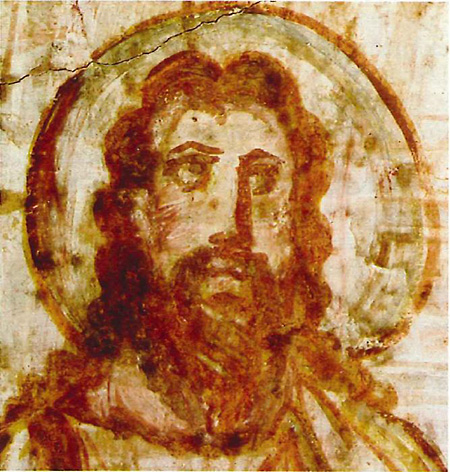 |
| Image of Jesus from a catacomb in Rome, 3rd century AD. Previous images had not attempted to depict him as a Jewish Rabbi but had used a symbolical figure of a shepherd with a sheep on his shoulders |
Wednesday, 13 January 2016
Homosexuality and the Bible
Homosexuality and the Bible
My suggestion, as always, is get back to the "Word of God".
Not that Jewish library of myths and legends, histories, law, old sayings, erotica, allegory, poetry and prophecy. And not the collection of letters by members of the early Christian Church, of whom Paul might well be seen as a "Doctor of the Church" along with Augustine, Gregory and the rest.
No. Get back to the true "Word of God". God's living "communication" with mankind. God's perfect example of how life should be lived. This is not about a "Book". It is about a “Message". It is not about "Theology". It's about "Life". Trust that through Jesus we know all that we need to know.
Question 1. If the words of Jesus, as written down for us by several witnesses, and the examples set by Jesus as likewise recorded, are sufficient, then what about the other stuff that constitutes "The Bible" aka "Holy Scripture" aka "The Word of God"? Is it factual? is it infallible? Does it matter?
A: God doesn't require perfection to work through us! Let us just thank God that he doesn't require perfection to work through us! The writers of those scriptures were seriously flawed people, just like us! The Holy Spirit doesn't "dictate". The Holy Spirit "inspires". ….. and so, with all the faults and flaws, the four Gospel accounts of Jesus continue to be the best possible source of information that we have about the love of God, and what he desires for us, and expects of us.
Question 2. If Jesus, as the incarnate Christ was/is the "Word" i.e. "Communication" of God, what did he actually communicate?
* He communicated that he accepted sinners. At least, he accepted sinners of ALMOST every class. The main sort of sinner that he showed a real disdain for was the hypocrite. The reason for this is fairly obvious. The sin of the hypocrite is personal deceit that breeds insurmountable intolerance towards other sinners.
* He communicated that nothing in the human condition shocked him and that no human was too foul for his touch. He challenged all prejudice of sex, race, cleanliness, orthodoxy. Not just the adulteress and the tax collector- the woman of the despised race of slave-traders was challenged to speak out against the prejudice of all around her. The Roman soldier who had a male servant, about whom he cared SO DEEPLY that he was prepared to grovel to an itinerant Jewish preacher, received Jesus' immediate reassurance.
*Jesus challenged the rules. Jesus was not locked into the values of "Religion". He made a strong case for common-sense and common-kindness. And since he demonstrated these values in such abundance, we need to develop them in ourselves.
*Jesus met people where they were at. He challenged the proud to bow down, the rich to be poor, the voiceless to speak out, and the gender-oppressed to act as equals. Jesus empowered people to mighty witness. The woman who touched his robe was healed; but more than that.... she witnessed, and was restored in the eyes of those to whom she was unclean.
*That story about that “Good” Samaritan”: the thing that set that Samaritan apart from the Priest and the Levite was that, like Jesus, Jewish ritual was not an obligation for him. He was free to touch that bleeding naked body, because he was not bound by religion or convention. The other two, in walking past, were simply fulfilling the requirement of the Law.
*The story about that Prodigal Father:... Yes, it was the father who was the real challenge to society. He accepted the socially unacceptable.
What I am saying here is that we are almost certainly wrong if we imagine that the love of homosexual people, and the expressions of love between homosexual partners would be unacceptable in the sight of Jesus. To condemn gender equality, to condemn what appears (scientifically) to be a God-given gender preference doesn't hold with the tolerance, the acceptance, the broadness of the love of Jesus, and the sort of loving acceptance that he led us to develop in ourselves. Neither does it seem possible for this intolerance to exist in the Divine nature of the Father, the Creator-God, whose message was embodied in Jesus. Surely Jesus didn’t get it wrong? Those four individual witnesses were awfully consistent in the way they depicted his character!
Question3: So what about the condemnation of the "sin of Sodom"?
The sin of Sodom, as enacted in the Old Testament has nothing to do with "gender preference". It has to do with the violent act of rape, still a major problem in the Middle East and Africa, and used to humiliate and intimidate those who do not conform, both male and female.
Monday, 30 June 2014
Women of Faith: in Australia and the Sudan
 |
| Susan Carland, Australian spokesperson for Islam |
 |
| Meriam Wani (nee Ibrahim), Sudanese Christian |
NOTE: This blog is posted with the express intention of alerting young women who may be attracted by the modesty and apparently high values espoused by those who have adopted Islam, to look at the realities.
I was prompted to make a comparison between these two women, both devout in their faith, by the reading of an article by Susan Carland: ''Ramadan: In this Month of Fasting, I Feed My Soul". (see link below)
The plight of Meriam Wani (called Meriam Ibrahim in the press) is known through the general outrage that her imprisonment and death sentence has caused worldwide, for supposed apostasy and living in a relationship which is not deemed a legal marriage under Islamic law. The outrage, while shared by many moderate Muslim people, is by no means universal. Meriam's guilt all hangs on the legality of whether being born the daughter of an Islamic father makes her inherently a Muslim, even though reared as a Christian.
Her lawyers (themselves Muslims) have taken the position that she never was truly Islamic, but was always Christian. On this technicality she has been freed; had she been proven inherently Muslim through her father, then the death sentence would stand.
This article presents her situation very clearly: "I am a Christian, and I will remain a Christian". (see link below)
Susan Carland is probably a much more familiar face to many Australians than to me, as I have not watched television for years. As a panellist on the ABC's Q&A she was described as a founding member and presenter of "Salam Cafe" an SBS comedy program questioning Islamic stereotypes. She teaches gender studies, sociology and politics at Monash University and is writing a doctoral thesis on the ways that Muslim women fight sexism.
The Image and the Realitiy
Susan Carland presents a face of Islam that is atypical worldwide, and demonstrates an extreme contrast between the life of a woman under traditional Islam and the liberty of being an Islamic woman convert, married to a liberally-minded man, and possessed of an Australian education, Australian health services, and, most importantly, Australian freedoms which not only permit her to practice Islam, but protect her rights to follow the rules to precisely the degree that she chooses, no more, no less. Her husband and others in the Muslim community, by the law of this country, cannot enforce any aspect of Islam upon her. She is free, by the law of this country, to commit apostasy, blasphemy and marital infidelity. Her husband or community might take it upon themselves to punish her, but they cannot have her stoned, gaoled or sentenced to death for so-doing. Of those three offences to Islam, in this country one is considered her inherent right and an essential freedom, one is widely disregarded, and the third, while generally socially unacceptable and grounds for divorce, is not punishable by law.
Ms Carland, as an Australian Muslim, presents an extremely glamorous, and therefore deceptive, face of Islam. She covers her head, as a concession to some rule in the Quran that says that women are supposed to cover "parts" (without being entirely specific about which parts), while at the same time, defying the intention of the law, enacted throughout most of the Islamic world, of reducing her sexual allure. Ms Carland is, in fact, an alluring and attractive young woman. Her clothes do not reveal her flesh, but certainly reveal her figure. The face surrounded by the veil is plucked, powdered and painted. Long dangly earrings adorn her earlobes. Is this a true face of Islam? Ms Carland would encourage us to see it as a real possibility. (Footnote 1)
In the real world outside the protection of the Australian justice system, it is not. It is not even a reality for many young women of Muslim families in the comparative freedom of western countries. Honour killings of young women have taken place in Australia, in Canada and the UK for perceived crimes such as having a Christian boyfriend, seeking a divorce, refusing to wear a veil, and simply "being too Westernised".
 |
| Rania Alayed was murdered by her husband in Manchester, UK, in 2013 for "being too Westernised". |
Non-Muslim women, all over the world, are assaulted for their non-compliance with Islamic codes. Assault rarely receives publicity unless it is the rape of a minor. The French police do not want to know that a fat old Australian grandmother was sexually assaulted on the tram to the historic Basilica of Saint-Denis or threatened with rape by a group of men outside the Church of Sainte-Jeanne in Rouen. Even here in Australia, when a young woman attending a Carols by Candlelight service goes to the toilet block and is dragged into the bushes by a group of Islamic youths, the police respond by giving them a warning and not even taking their names down. Well, she fought them off, so it was OK, in the end, wasn't it?
In the case of Lara Logan, (below), attacked by a dozen men during the post-Morsi celebrations in Cairo's main square, the main newspaper of Islam, Al Jazeera, refused to publish a story on the matter, stating that they published stories by journalists, not about journalists.
 |
| Lara Logan, US journalist was separated from her friends and raped just moments after this photograph was taken. The men were out in the main square of Cairo to celebrate the overthrow of president Morsi in 2011. The attack was explained as being "politically motivated to intimidate opponents". Sure! The sexual assault of any woman who does not comply with strict Islamic dress codes is commonplace in Cairo. |
Feeding the Soul
Susan Carland's recent article in ABC "Religion and Ethics" is about Ramandan, the time of fasting. Carland emphasises the role of fasting in removing the believer from the distractions of the world, and putting them in touch with their soul. It is a process of self-purification.
The purpose of Ramadan is further explained here in an excerpt from an article "Return to the Centre" (July 2013), by Tariq Ramandan, also writing for ABC "Religion and Ethics":
The purpose of Ramadan is further explained here in an excerpt from an article "Return to the Centre" (July 2013), by Tariq Ramandan, also writing for ABC "Religion and Ethics":
On reading Susan Carland's article, published at a time when Meriam Wani was released, but re-arrested on different grounds, I was prompted to compare the situations of the two women. I have sent my comments to the ABC, but they will be screened before publication, so I decided to publish here.
The relevant links:
My Comments on Susan Carland's article
I notice the subject of Susan Carland's studies is "the ways that
Muslim women fight against sexism". I am wondering if this includes fight
against the Islamic law that dictates that an Islamic man may marry a Christian
person, but an Islamic woman may not.
Ms Cartland, to judge (rightly or wrongly) by her name (presumably that
of her father or husband) was not born into Islam. It appears that she has
something in common with Ms Meriam Wani (nee Abrahim) whose case has been in
the news lately, both being followers of a faith by commitment.
I would dearly love to know what insight the deprivation of fasting and
the exploration of her soul has given Ms Carland about the plight of Meriam,
who continues to swear her allegiance to God as revealed through Jesus (rather
than through Muhammad) while giving birth, shackled and half-starved, on the
floor of a filthy prison cell.
If Meriam was a Muslim by commitment, as Ms Carland is, she would, by
explicit statements of the Quran and the Hadith, have the right to deny her
faith if her life was threatened by a non-Muslim. This is legal, in Islamic
law. Maintaining the fact of ones
true commitment to another faith is not. (3)
The principle that allows a Muslim to deny their faith is "Al
Takeyya". If Ms Carland, or another person of the Islamic faith needed to
invoke this law, then they could clear themselves of the apostasy by the
penance of feeding a poor family, freeing a slave, or by fasting for three days. (3)
On the other hand, as a Christian, Meriam was bound by her personal
faith, (rather than any written law of Christianity) to maintain the
truth, i.e. the actual fact of her belief. No doubt, it was her faith that gave
her the courage to maintain this truth, regardless of the potential outcome of
Islamic justice. The laws of the
land in which we, as Australians reside, based upon Christian principles, also
demand “the truth” with no loophole for lies. Lying to save one's own neck is
not only illegal, it is socially regarded as "gutless" i.e. without
honour, particularly if it blames or risks other people.
The choice of adoption of any religion that sanctions acts towards human
beings that Islam has sanctioned towards Meriam Wani (nee Abrahim) needs to be
the subject of much soul searching by every person, before making an ultimate
commitment to Islam that can, by the law of the God of Muhammad, be denied for
convenience, if danger threatens, but that cannot, by any providence of Mercy,
either of the God of Muhammad or the courts of Islam, be permanently revoked
once made. (4)
The ruminations of Ms Carland's soul on the matter of the treatment and
extraordinary courage of Meriam Wani (nee Abrahim) would be pertinent and
interesting, as Ms Carland herself presents such a very attractive, serene,
erudite and even glamorous face Islam. (5)
FOOTNOTES:
1. I am not expressing any
dislike of adornment, but of the adoption of an essentially religious garment in a manner that appears to reduce it to a token symbol. Long dangly earrings (as worn in other online photos) are a denial of everything
that the headscarf represents, so why is the headscarf being worn at all?
2. The emphasis on
self-improvement, and lack of emphasis on the role of God in the process are
contrasts with Christian teachings which will be immediately apparent to some
readers.
3. Christians, and other
people in Western society who are not familiar with Islamic ethics, often make
the error of attributing to Islam some concepts that are basic to Christianity,
such as the nature of the "truth". It is widely presumed that being
"truthful" is a characteristic of devout people of every faith.
This is not the case, with Islam. In Islam, there are a number of defined but broadly inclusive circumstances in which it is permissible to lie: when ones life or safety is under threat, when telling a lie will promote peace among believers, family or neighbourhood; when telling a lie will aid in overcoming an enemy; and, in the broadest sense applicable, when telling a lie will promote the cause of Islam. In all these cases the lie is described as a "righteous lie". The implications of the concept of Al Takeyya, the righteous lie, are far reaching.
Al Takeyya is why Ahmadinejad, President if Iran, could state publicly that the Holocaust never happened, and be praised by Muslims across the world for saying things that annoy the Western World. The fact that he so obviously was lying was immaterial in the eyes of those who praised him and saw his lies as effective and entirely righteous challenge to Western ideology. Meanwhile, the bemused non-Muslim observers thought the man was not only offensive but also ridiculous.
Al Takeyya is the reason why Palestinian TV programs can state that the hearts of Muslim children are used by the Jews to make bread for the passover.
Al Takeyya is the reason why a Muslim cleric can frame an intellectually disabled child, or three women can witness that the fourth woman at the water fountain, a Christian, committed blasphemy.
Most significantly, Al Takkeyya is the reason why Islam can be promoted by Islamic scholars and Imans accross the world as a religion of "Peace" when all the evidence points the other way.
This is not the case, with Islam. In Islam, there are a number of defined but broadly inclusive circumstances in which it is permissible to lie: when ones life or safety is under threat, when telling a lie will promote peace among believers, family or neighbourhood; when telling a lie will aid in overcoming an enemy; and, in the broadest sense applicable, when telling a lie will promote the cause of Islam. In all these cases the lie is described as a "righteous lie". The implications of the concept of Al Takeyya, the righteous lie, are far reaching.
Al Takeyya is why Ahmadinejad, President if Iran, could state publicly that the Holocaust never happened, and be praised by Muslims across the world for saying things that annoy the Western World. The fact that he so obviously was lying was immaterial in the eyes of those who praised him and saw his lies as effective and entirely righteous challenge to Western ideology. Meanwhile, the bemused non-Muslim observers thought the man was not only offensive but also ridiculous.
Al Takeyya is the reason why Palestinian TV programs can state that the hearts of Muslim children are used by the Jews to make bread for the passover.
Al Takeyya is the reason why a Muslim cleric can frame an intellectually disabled child, or three women can witness that the fourth woman at the water fountain, a Christian, committed blasphemy.
Most significantly, Al Takkeyya is the reason why Islam can be promoted by Islamic scholars and Imans accross the world as a religion of "Peace" when all the evidence points the other way.
4. In the present
case lawyers were able to argue that the commitment to Islam was not made by
the accused herself, but implied by her paternity; therefore she had not
apostatised.
POSTSCRIPT
Meriam was released and she and Wani planned to leave the country, but they were arrested at the airport. Ultimately, pressure from world governments brought about their release and departure from the country. They escaped to Italy, where they met Pope Francis who thanked them for their courage and witness to Christianity. On 31st August 2014, the family arrived in the Inited States.
 |
| Meriam and her husband being welcomed into the US. |
Sunday, 15 June 2014
Another poem
 |
| This is a young Clydesdale, not the Norman of the poem who was a mature horse. He was photographed at Mount Kembla, NSW, in 2006 |
Reprieve
“I reckon he’s a real nice horse!”
says Peter Fuller, leaning on the paddock fence.
“I got him from the knackers
and I don’t know where he came from.
He’s got lovely conformation,
noble head
and good strong legs!”
Norman stood on four great tree-trunks
feathered white around each base,
with a coat of old red cedar
and a white blaze down his face.
“But I don’t know if he’s ever worked before,”
says Peter Fuller,
“So I’ll harness up
and try him out today.
We’re doing a promotion for the discount store,”
says Peter Fuller.
“I just hope that he’s OK!”
“I got him from the knackers
and I don’t know where he came from.
He’s got lovely conformation,
noble head
and good strong legs!”
Norman stood on four great tree-trunks
feathered white around each base,
with a coat of old red cedar
and a white blaze down his face.
“But I don’t know if he’s ever worked before,”
says Peter Fuller,
“So I’ll harness up
and try him out today.
We’re doing a promotion for the discount store,”
says Peter Fuller.
“I just hope that he’s OK!”
Peter
burnished Norman’s hide,
polished up the stripy hooves
and decked his tail with flowers and ribbon.
Norman lowered down his head
while in his mane rosettes were made.
Out came the Scottish harness,
all its leather oiled with Dubbin,
the heavy collar, the shining chains,
the silver breastplate, the gleaming brasses.
Norman took the bit and backed up to the waggon.
Peter fixed the traces and gathered up the reins.
polished up the stripy hooves
and decked his tail with flowers and ribbon.
Norman lowered down his head
while in his mane rosettes were made.
Out came the Scottish harness,
all its leather oiled with Dubbin,
the heavy collar, the shining chains,
the silver breastplate, the gleaming brasses.
Norman took the bit and backed up to the waggon.
Peter fixed the traces and gathered up the reins.
All
day long
the country town of Orange
rang with the echoes of its
not-so-distant past-
staccato clopping of the hooves,
the jingling chains, the clink of brass,
the heavy rumbling of the wheels,
the old familiar cries
of “Gee!” and “Whoa!”
And all day Norman worked
and all day Peter sat aloft
and only cracked the whip
to make a show.
the country town of Orange
rang with the echoes of its
not-so-distant past-
staccato clopping of the hooves,
the jingling chains, the clink of brass,
the heavy rumbling of the wheels,
the old familiar cries
of “Gee!” and “Whoa!”
And all day Norman worked
and all day Peter sat aloft
and only cracked the whip
to make a show.
At six o’clock,
the last delivery done,
they turned the waggon round
to head for home.
“A mighty chunk of horse-meat you got there!”
remarked the butcher,
pausing in his door
to lean upon his broom.
Peter climbed down off the seat
and stroked the horse’s sweating side.
“I
got him from the Blayney Abattoir
for thirty quid!
We’re going in the Lithgow Show-
and after that, the Royal!
I want to buy that fancy cart
that’s sitting in your shed.
I reckon we’re a real good team!”
Peter Fuller said.
for thirty quid!
We’re going in the Lithgow Show-
and after that, the Royal!
I want to buy that fancy cart
that’s sitting in your shed.
I reckon we’re a real good team!”
Peter Fuller said.
© Tamsyn Taylor, February 18, 2002
Sunday, 16 March 2014
The Lord's Prayer
 |
| Mike Taylor |
I have been reliably informed by young Evangelical Christians that we don't really need to learn the Lord's Prayer by heart. One young man informed me confidently that in the future it will hardly be used any more. ..... and, although this might come as a surprise to some, in the Anglican Diocese of Sydney, this seems to be quite right.
The Sydney Diocese (for those who don't know) has a Bible College which sets the benchmark for how 21st Century Evangelical Ministry ought to operate. A recent graduate of Moore College argued the point that the Lord's Prayer was given to us as an example of how to pray. It didn't come with any obligation that it should be learnt by heart and repeated daily, or even repeated once every Sunday. If we read the Lord's Prayer, and comprehend from reading it, how praying ought to be done, then we are free to pray our own prayers. We can pray, safe in the knowledge that we know how to do it. And, by this reasoning, a leader, in a church or community situation, knowing how to pray, can pray effectively for the congregation or group, and say what needs saying......... or can they?
Is there any reason for bothering to memorise the Lord's Prayer? Is there any reason for using it, on occasions when Christians gather together, given that Jesus didn't actually command us to use it?
My son, who is now a Christian youth leader, went to a Christian school. And for the six years that he was there, I went to services and functions. I don't recall ever praying the Lord's Prayer on any school occasion..... not once, even once, in those six years. When parents were asked to comment on school matters, it was one of the things on which I wrote at length. To no avail.
My son goes to a large lively youth service at the local Christian auditorium, on Sunday evenings. I do recall the Lord's Prayer being used once. It was on the occasion of Archbishop Peter Jensen's visit, and was the same day that the rector included the Apostle's Creed, and explained to the young people present that these two elements were traditional to Anglican Church worship, so we were going to repeat them, with the aid of the overhead screens, because, of course, none of the young people could be expected to know these things by heart. In retrospect, Archbishop Peter may not have even noticed if they were omitted, since he was previously the principal of Moore College, and may have had a part in encouraging his clergy in the understanding that they should make up their own prayers, rather than simply reciting what they have learnt.
I have already asked the question, is there a point in learning the Lord's Prayer (by heart, as they say), and continuing to use it?
My dying brother would encourage me to say, yes, there is!
It seems to me that there is an extraordinary degree of arrogance in the notion that we can dispense with that which Christ himself gave us. This is the prayer of the person who, confronted with fear, agony or grief, can think of no other words. This is the prayer of the aged and dying. This is the prayer that remains when mind and memory fail. This is the prayer that unites us as Christians across the world.
"No it's not," says my young Moore College graduate. "In point of fact, we are united by the Statement of Faith." (a.k.a. The Creed)
Well yes, that too! But Jesus didn't give us the creed. The creed is mankind's invention. It's about Church. It isn't about God. We don't "draw near to God" in the words of the Creed. We draw near to God in prayer.
There has always been a place in both public and private worship for the custom-made prayer of the prayer leader or praying individual. We are encouraged to bring the "desires of our hearts" before God, in praise, thanks and petition. But does the priest or prayer leader know what the other praying individuals have in their hearts?
The arrogance of modern Evangelical leaders is that they think they have all the answers, all the time. They obviously believe that the prayers that they utter, in front of, and on behalf of congregations, youth groups, school assemblies and so on, are able to fill all the needs every time; that after they have prayed, nothing is left undone, and no words remain to be said, on behalf of the group, to God. The group listens and says "Amen". They say it, politely, whether everything has been covered, or not. The group doesn't usually pray out loud, together, as a group, unless there is a prayer projected onto a screen that they can follow. Nobody says, anymore, "As our Saviour Christ has taught us, we are confident to pray.....". Young people are not taught, any more, so they are no longer "confident" to pray it.
The beauty of the prayer that Our Saviour taught us is that it covers all sorts of possibilities. It states who it is to whom we pray: Our Father in Heaven. It expresses his greatness and our trust in his wisdom and might. It sources our needs and petitions our forgiveness. It acknowledges our weakness and seeks relief from our greatest fears. Basically, it is the prayer that has everything covered.

Let all the World, in Every Corner, Sing!
"The power of art draws people to behold it. Good art bears its message into the soul through the imagination and begins to appeal to reason, for art makes ideas plausible. The quality of music and speech in worship will have a major impact on its evangelistic power. In many churches, the quality of the music is mediocre or poor, but it does not disturb the faithful. Their faith makes the words of the hymn or the song meaningful despite its artistically poor expression, and further, they usually have a personal relationship with the song leader and musicians. But any outsider who arrives not convinced of the truth and having no relationship to the music leaders will be bored or irritated by the poor offering. Excellent aesthetics includes outsiders, while mediocre or poor aesthetics exclude. The low level of artistic quality in many churches guarantees that only insiders will continue to come. To say this positively, the attraction of good art will play a major part in drawing non-Christians." (Tim Keller - Evangelistic Worship, p. 7).
"Excellent aesthetics includes
outsiders, while mediocre or poor aesthetics exclude." This is absolute nonsense!
For a start,
it is based on some preconceived notion of what is aesthetically excellent,
what is mediocre and what is poor.
One of the things that people of almost every type find
"inclusive" is participation.
A church with talented musicians and a great "up-front" music
team can suffer from an extreme lack of participation, simply because every
church service is a "performance". People don't "sing"; they simply "sing
along".
If you can get
ordinary people to sing "together", then you have something that
others will want to join in. The music can be as excellent as Handel's
Hallelujah Chorus, Bach's "Oh Sacred head sore wounded", or the magnificent
Wesley/Mendelsshon combo of "Hark the Herald Angels"; it can be as
corny as "Standing on the Promises" or "When the roll is called
up yonder"; as simple as "Wide wide as the ocean" or the Taize
chant "Laudate Dominum", or totally and utterly trite. But whatever the music may be, wherever
people sing with enthusiasm, others will join in, and in doing so, will be
included, just in the process of raising their voices as part of the multitude.
Modern styles of worship have
increasingly robbed worshippers of the pleasure of hearing their own voice
raised as one of many. Recitation of familiar prayers, including the Lord's
Prayer, is in many places a thing of the past. The voices of the young are
rarely raised together in that ancient statement of faith known as The Creed.
Familiar hymns that traditionally have been used to bond communities (young and
old) in times of grief or celebration have been forgotten in the provision of
stimulating entertainment for the young.
No. "Excellent
aesthetics" is one of the least considerations. Being able to join in
"The Lord's my Shepherd" with your mother, granny and other
mourners at your grandfather's
funeral is to be included. Standing there and fumbling because you don't know
it when you need it is to be excluded. Holding a Carol Service and using the
familiar carols but with modernised words and an up-beat rhythm excludes all
the people who only come once a year to bring their kids.
Putting a group out
the front who concentrates on producing a quality performance, is exclusive.
Putting just one leader whose primary job is not to play an instrument and sing
into a microphone, but to conduct the whole congregation is far more inclusive.
No-more than one person can lead congregational singing, unless the venue is so
big that people cannot see. There is nothing wrong with a backing group which
serves like a choir, but the minute they take front stage, you have lost your
congregational singing.
The traditional choral service such as are still used in cathedrals and collegiate churches across the world, are an effective way of getting congregations to sing. The choir doesn't face the congregation. They sing the responses (which
the congregation can join in) and when they do perform during a service, it is an "anthem" and it is clearly a "worship performance". The choir also leads the hymn-singing, which is generally done in
unison, with the choir breaking into parts in the last verse. The treble line
that is produced in the final verse is intended specifically to complement the
unison singing of a congregation of ordinary untrained singers. Being part of
the congregation when the choristers suddenly break loose in a great hymn can
be thrilling, but it is the general rumble of untrained voices that is the
essential component, not the choir.
I will put some of my favourite hymn-singing clips on my page.
Some of my favourite Youtube Hymn-singing:
http://www.youtube.com/watch?v=9R5vyetZFoI "Guide me, O Thou Great Jehovah" from Wales. Jesus would have been right in the middle of this.
http://www.youtube.com/watch?v=_TgfhYsmGEQ
a very enthusiastic Easter Anthem
Taize from Notre Dame, Paris
This is what a well-trained congregation
can do!
The words and music of this hymn are as
trite as they come. The singing is delightful!
Pope Benedict really enjoyed his visit to
Westminster Abbey. The name of the
tune, appropriately, is “Westminster Abbey” by Purcell, and the words “Christ
is made the sure foundation”. The grave with the poppies is that of the Unknown
Soldier. This was a great moment for ecumenism.
The very poor video is of a wonderful and glorious moment in the history of Christianity. "Shine Jesus Shine" at the inaugural service
at Our Lady of the Rosary, first Christian Church in Qatar, an Islamic state on a peninsular in the Persian Gulf. The Catholic congregation is
mainly domestic servants and workers from the Philippines and other parts of
South East Asia.
https://www.youtube.com/watch?v=xuQjpbdx6TY
Subscribe to:
Posts (Atom)